
Government says stronger reserves and private generation will protect households during the coming dry season.
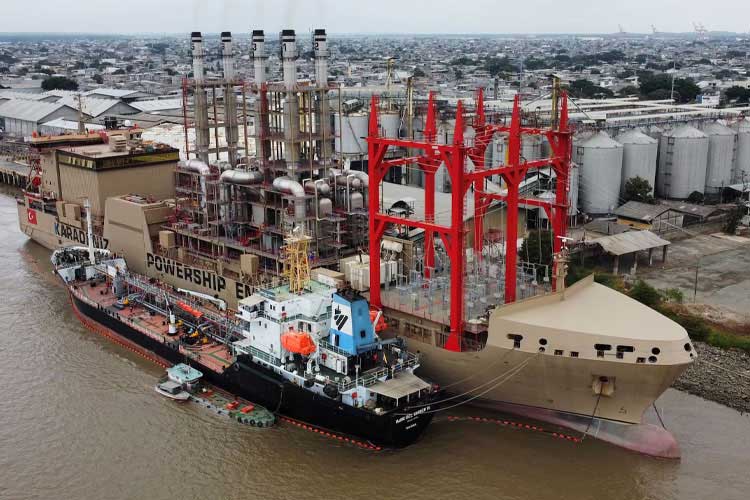
President Daniel Noboa says Ecuador will enter the next dry season without contracting additional floating power plants, arguing that improved hydroelectric production, fuller reservoirs and recently completed maintenance have reduced the risk of nationwide electricity rationing.
At the same time, the president warned that large industrial consumers could be removed from the public grid if they fail to meet a legal deadline requiring them to develop their own sources of electricity.
During a July 31st interview with Radio Platinum in Quito, Noboa presented a far more optimistic assessment of the country’s power system than the projections that circulated earlier in the year, when officials estimated Ecuador could face an electricity deficit of between 1,300 and 1,440 megawatts in 2026.
According to Noboa, those warnings were based on a worst-case scenario that has not materialized because the government increased available generation and managed water reserves more carefully.
“The story that we had an apocalyptic vision has fallen apart,” he said, pointing to the absence of blackouts and scheduled rationing.
Barges remain idle as reservoirs hold
Noboa ruled out hiring more electricity-generating barges, saying the temporary plants are expensive and should not become a permanent substitute for investment in the national power system.
“No, that drains Ecuadorians’ money,” he said when asked whether the government might add more barges before water levels begin falling during the dry season.
The two barges currently operating under government contracts were idle on the morning of the interview, Noboa said, because Ecuador had enough electricity available from other sources. He also noted that coastal reservoirs had been maintained at favorable levels.
The government has relied on barges and other emergency generation measures in recent years to compensate for shortages caused by drought, delayed maintenance, unavailable thermal plants and the country’s heavy dependence on hydroelectric power.
Noboa argued that improved maintenance at facilities including Minas San Francisco and Daule-Peripa has added between 500 and 600 megawatts of available generation compared with the most pessimistic forecasts. Earlier projections, he said, had assigned only a 13% probability that the country would recover that amount of capacity.
“We have managed the reservoirs well and carried out the necessary maintenance,” the president said.
Industries face December deadline
The government’s strategy also depends on shifting part of Ecuador’s electricity demand away from the National Interconnected System.
Large consumers covered by the country’s self-generation requirements have until December 2026 to install their own generating systems, purchase electricity directly or make other arrangements that reduce their dependence on the public grid.
Noboa warned that companies refusing to comply could be disconnected when the national system is under pressure.
“They will be disconnected if they refuse to follow the rules, regulations and laws,” he said. “We are not going to affect citizens who need electricity for their daily lives, and then we’ll see if they survive or not.”
The president said compliance by major industries could remove between 600 and 700 megawatts of demand from the public system. That amount, he said, would be comparable to the generating capacity of approximately six barges and could prevent the government from spending millions of dollars on additional emergency contracts.
The policy is intended to reserve more electricity for households, small businesses and essential services during periods when hydroelectric production declines.
Private projects move forward
Noboa said the administration has accelerated permits for companies seeking to build private generation projects or contract electricity independently.
The government is also simplifying procedures for new energy investments as part of a broader effort to increase domestic production and reduce reliance on temporary equipment, imported electricity and emergency purchases.
Among the projects highlighted by the president are investments planned by Cox Energía, which he said will expand its presence in Ecuador through developments totaling more than 400 megawatts of installed capacity.
The additional projects would not necessarily eliminate Ecuador’s exposure to seasonal shortages, but officials expect them to diversify the system and provide more alternatives when hydroelectric output is reduced.
Colombian electricity remains an option
Noboa also said Ecuador continues to have a positive relationship with Colombia and expects cross-border electricity sales to resume when conditions permit.
Electricity imports from Colombia have historically provided Ecuador with an important source of backup generation, particularly during droughts. However, availability depends on Colombia’s own supply conditions and domestic demand.
The president said regional exchanges will remain useful but insisted that Ecuador’s priority must be increasing its own generating capacity rather than depending on neighboring countries or costly short-term contracts.
El Niño could test eastern watersheds
For now, Noboa said the main reservoirs supplying the electricity system are full or close to their maximum operating levels.
He singled out the Mazar reservoir in the Paute hydroelectric complex, describing it as close to overflowing. Its water level stood at approximately 2,142.8 meters above sea level, providing the system with a significant reserve before the driest months.
Those conditions could change as the dry season progresses. Reservoir levels typically decline when rainfall decreases in the eastern and southern watersheds that feed Ecuador’s largest hydroelectric plants.
The possible development of El Niño adds another complication because the phenomenon can produce intense rainfall along the coast while contributing to drier conditions in the Amazon and Andean basins where much of the country’s hydroelectric water originates.
The government’s ability to avoid rationing will therefore depend not only on current reservoir levels, but also on rainfall patterns, the reliability of repaired generating units, the pace of private investment and whether large industries meet the December self-generation deadline.
Famous last words…….here come the 14 hour power cuts once again……