
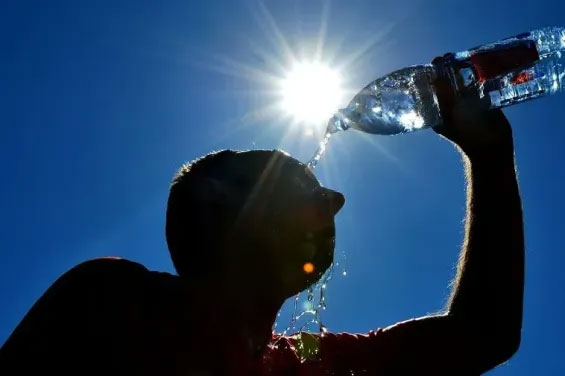
Ecuadorian climatologist warns that hotter air magnifies droughts, rainfall and deadly heat across vulnerable regions.
The number of heat waves affecting Guayaquil has risen by nearly 400% since the 1980s, offering a stark local example of how global warming is reshaping weather patterns that once appeared predictable.
Ecuadorian climatologist Raúl Cordero says the dramatic increase in extreme heat in his hometown is part of a broader transformation taking place across tropical regions. Depending on the location studied, the frequency of heat waves has increased by 200% to 300%, with Guayaquil experiencing an even sharper rise.
The changes are particularly concerning as El Niño strengthens in the Pacific Ocean, potentially intensifying both excessive rainfall and drought across different parts of the world.
Cordero, a professor at the University of Groningen in the Netherlands, says El Niño remains a natural climate cycle, but its effects now unfold within an atmosphere that has been altered by decades of greenhouse gas emissions.
“The planet we were born on no longer exists,” Cordero said, describing the extent to which human activity has changed atmospheric conditions.
Natural cycle meets a warmer atmosphere
El Niño develops when unusually warm surface waters in the central and eastern tropical Pacific influence atmospheric circulation around the globe. Although the phenomenon has occurred for centuries, Cordero says rising global temperatures can amplify many of its consequences.
“Global warming exacerbates many of the impacts of El Niño,” he said.
A warmer atmosphere can hold more moisture, creating conditions for heavier downpours when storms develop. At the same time, higher temperatures accelerate evaporation and remove moisture from soil, making dry periods more damaging even when reductions in rainfall are not historically exceptional.
Severe drought, Cordero explained, is therefore not caused only by a lack of rain. Prolonged heat can dry vegetation, farmland and water reserves, increasing agricultural losses and placing additional pressure on communities that depend on rivers and reservoirs.
The United Nations has warned that El Niño is intensifying in the Pacific, with its influence expected to become more pronounced beginning in August. Ecuadorian authorities have placed 143 cantons under an orange alert as part of preparations for possible flooding, landslides and other emergencies.
Rainfall and drought risks spread worldwide
The coming El Niño period could produce sharply different conditions from one region to another.
Potentially historic droughts are expected in the Amazon basin, the Bolivian highlands, South Africa and Southeast Asia, according to Cordero. Meanwhile, wetter-than-normal conditions could affect the Middle East, the southern United States, northern Mexico, central Chile, southern Brazil and central Argentina.
Those forecasts illustrate the global reach of El Niño, which can disrupt rainfall patterns thousands of kilometers from the Pacific waters where it begins.
Some areas vulnerable to heavy rain could receive even more intense precipitation because of global warming, Cordero warned. The combination raises the possibility that existing drainage systems, river defenses and emergency services may be overwhelmed by events that exceed historical expectations.
In Ecuador, previous El Niño episodes have caused extensive flooding along the coast, damaged roads and bridges, disrupted agriculture and forced families from their homes. Although the exact severity and location of the coming impacts remain uncertain, officials are attempting to prepare before the strongest effects emerge.
Heat remains an underestimated killer
While floods, hurricanes and landslides often produce visible destruction, Cordero says heat waves are among the deadliest manifestations of climate change.
Their human toll is frequently underestimated because extreme heat is rarely listed as the direct cause of death. Instead, heat can worsen heart disease, respiratory problems and other medical conditions, particularly among older adults, outdoor workers and people without access to cooling.
“When someone dies, they never get a certificate that says ‘died from a heat wave,’” Cordero said.
That lack of direct attribution helps explain why heat-related deaths may receive less attention than other climate disasters, even though thousands of people are believed to die from extreme temperatures worldwide.
The danger is especially relevant in densely populated cities such as Guayaquil, where concrete, asphalt and limited vegetation can trap heat. Nighttime temperatures may remain elevated, preventing the body from recovering after prolonged daytime exposure.
The decade from 2015 through 2025 included the warmest years recorded globally, according to international climate monitoring agencies. Cordero says those records are evidence that the world is no longer experiencing isolated anomalies but a sustained warming trend.
Oil dependence complicates Ecuador’s transition
Cordero also points to Ecuador’s economic reliance on petroleum as a major obstacle to becoming a regional leader in renewable energy.
Oil remains one of the country’s most important exports and a significant source of public revenue. That dependence makes a rapid departure from fossil fuels politically and economically difficult, even as Ecuador faces growing climate-related risks.
Countries without major petroleum reserves may have a stronger financial incentive to accelerate renewable energy development, Cordero said. He cited China and India as examples of large economies that are investing heavily in alternatives partly because reducing fossil-fuel imports can improve their economic and energy security.
For Ecuador, the challenge is to expand cleaner energy while managing the loss of income and employment that could accompany a decline in oil production.
That transition would require long-term planning, new investment and policies capable of protecting communities whose livelihoods remain connected to the petroleum industry.
Technology offers grounds for optimism
Despite his warnings, Cordero rejects the idea that the climate outlook is hopeless.
He says progress in renewable energy, emissions reduction and climate adaptation is advancing at a pace that would have appeared unrealistic a decade ago. Solar and wind generation have expanded rapidly, battery technology continues to improve, and governments have greater access to forecasting tools capable of identifying threats before disasters occur.
Cordero also argues that describing current conditions as a “new normal” can be misleading because the climate has not yet stabilized. Without substantial reductions in greenhouse gas emissions, temperatures and extreme weather risks could continue changing.
The goal, he says, should be to stop the continuing deterioration rather than simply become accustomed to worsening conditions. That will require reducing dependence on fossil fuels while investing in infrastructure, warning systems, public health measures and agricultural practices designed for a hotter world.
Many countries are already gaining access to technology that can reduce deaths and property damage, including improved weather models, stronger construction standards and more effective emergency communication systems.
“Even though the situation today is very bad in terms of climate, I would say that we have never been more prepared to face a global challenge,” Cordero said.
For Guayaquil and other cities already confronting more frequent heat waves, that preparation will increasingly determine whether rising temperatures remain a warning in the climate record or develop into a widening public health emergency.
0 Comments