
Discount chain crosses $1 billion in revenue as established supermarket groups also post gains.
Ecuador’s supermarket sector ended 2025 with higher sales among most of its largest players, but the standout story came from a chain that only a few years ago was still far from the top of the corporate rankings.
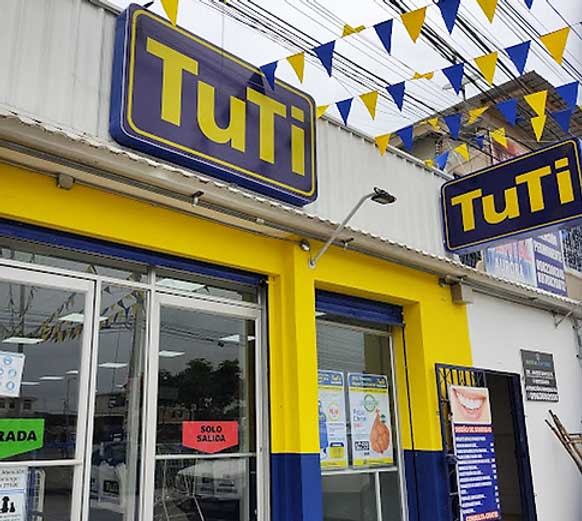
TuTi, the discount store chain that has expanded quickly across the country, surpassed $1 billion in annual revenue in 2025, placing it among Ecuador’s highest-earning companies based on the financial statements currently available from the Superintendency of Companies.
The company reported total revenue of $1.008 billion for 2025, a dramatic increase from the $240 million it recorded in 2022. The jump places TuTi in what is often referred to as the “$1 billion club,” a group of companies whose annual sales put them among the largest corporate players in the country.
With many of Ecuador’s corporate balance sheets now public, TuTi’s growth has become one of the most visible signs of how the country’s retail market is changing. While traditional supermarket groups continue to dominate the sector, the rapid advance of discount stores shows that price-conscious shopping has become a major force in Ecuadorian consumer behavior.
A fast climb toward the top
TuTi’s rise has been especially notable because of the speed of its expansion. In just three years, the chain more than quadrupled its revenue, moving from a mid-sized retail player to one approaching the country’s top 10 companies by income.
The available financial information does not yet include every large company in Ecuador, so the final national ranking could still shift as more statements are posted. Even so, the figures already published show that TuTi has entered a level of corporate scale usually occupied by long-established businesses in banking, retail, energy, food distribution and telecommunications.
Its growth reflects a business model built around lower prices, smaller-format stores and high product turnover. For shoppers facing inflation, uneven employment conditions and continued pressure on household budgets, discount retail has become an increasingly attractive option.
That trend does not mean Ecuadorians have abandoned traditional supermarkets, but it does suggest that the market is becoming more segmented. Consumers appear willing to split their purchases among different store formats, using larger supermarkets for some items while turning to discount chains for everyday basics.
Favorita remains the sector leader
Despite TuTi’s rapid advance, Corporación Favorita remains the largest supermarket group in the country. The company, which operates Supermaxi, Akí and Megamaxi, reported that 2025 was a positive year for both sales and financial results.
According to its management report, Favorita slightly exceeded its initial projections for the year. The company posted revenue growth of 5.86%, rising from $2.491 billion in 2024 to about $2.637 billion in 2025.
That performance reinforced Favorita’s position at the top of Ecuador’s supermarket market. Its brands serve different consumer segments, from Supermaxi and Megamaxi stores aimed at broader and higher-volume shopping, to Akí outlets that compete more directly on price and convenience.
The company’s growth also suggests that Ecuador’s formal retail sector continued to expand in 2025, despite economic uncertainty and tighter spending among many households.
El Rosado and Tía also grow
Corporación El Rosado, owner of Mi Comisariato and other retail brands, also reported higher revenue in 2025. The company’s income increased by 4.43%, from $1.588 billion in 2024 to $1.658 billion last year.
El Rosado remains one of the country’s most important retail groups, with a strong presence in supermarkets, department-style retailing and commercial centers. Its continued growth places it firmly behind Favorita among the country’s major supermarket operators, while still keeping it well ahead of most competitors.
Tía also posted a positive year. The chain increased revenue from $757 million in 2024 to $794.9 million in 2025, a gain of 4.9%.
Tía’s growth reflects the strength of neighborhood-oriented retailing, particularly in areas where smaller supermarkets and convenient store locations remain important to daily shopping habits. The company has long competed through accessibility, promotions and a broad presence in urban and smaller-market areas.
Mixed results among other retailers
Not every company in the sector saw growth. Grupo Gerardo Ortiz e Hijos reported revenue of $550 million in 2025, an increase of $23 million from the previous year.
Mega Santamaría, however, moved in the opposite direction. Its revenue fell from $237.9 million in 2024 to $207.8 million in 2025, a decline of 12.6%.
The drop shows that while the supermarket sector as a whole had a positive year, competition remains intense. Large chains are fighting not only against each other, but also against discount operators, informal commerce, neighborhood stores and changing consumer habits.
As household budgets remain under pressure, shoppers are likely to continue comparing prices more aggressively. That environment tends to benefit retailers that can offer lower costs, frequent promotions or a clear value proposition.
Company filings reveal broader picture
The latest revenue figures come from the 2025 financial statements submitted by companies to the Superintendency of Companies.
After the official deadline, which was extended until May 4th, 2026, a total of 148,404 companies had submitted their financial statements for 2025. As of May 8th, 2026, 131,994 of those balance sheets were publicly available on the regulator’s website, representing 89% of the submitted reports.
Those publicly available statements showed total reported revenue of $147.038 billion. The figure is not yet complete, since some financial statements referenced by the regulator had still not appeared on the public website.
For comparison, 142,521 companies submitted financial statements for 2024, with total reported revenue of $163.262 billion. The difference between the two years may change as more 2025 statements become publicly available.
For now, the supermarket numbers offer one of the clearest snapshots of Ecuador’s retail economy. Favorita and El Rosado remain the giants of the sector, Tía continues to grow steadily, and TuTi has become the fast-moving challenger whose expansion is forcing a new look at how Ecuadorians shop.
0 Comments