
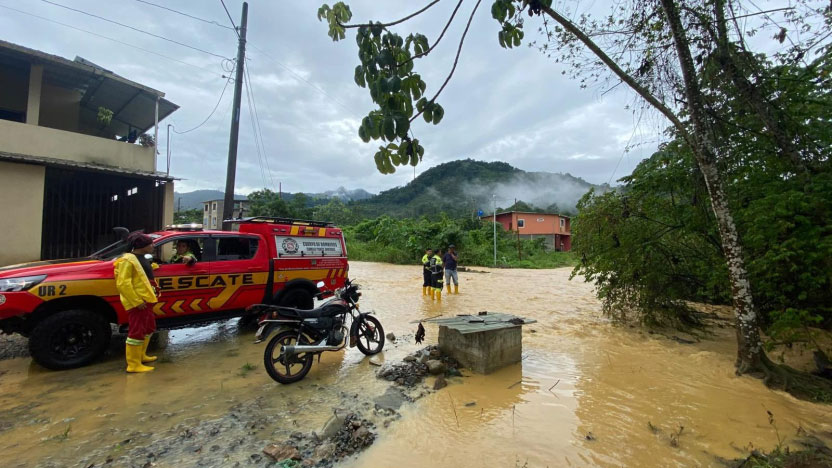
Global weather agencies say the Pacific warming event could peak late this year and disrupt weather worldwide.
A powerful Pacific shift is underway
A new El Niño has begun forming in the tropical Pacific, and international forecasters are warning that it could become one of the strongest episodes recorded in more than seven decades of modern climate monitoring.
The U.S. National Oceanic and Atmospheric Administration confirmed June 11th that El Niño conditions are now developing, marking the start of a climate event that can alter rainfall, drought, storms and temperatures across much of the world. While El Niño is a recurring phenomenon, the latest projections suggest the 2026-2027 episode may be anything but routine.
According to NOAA’s latest advisory, the probability of a “very strong” El Niño has risen sharply, with forecasters now placing the odds at 63% for the November-to-January period. If those forecast holds, the event could rank among the largest El Niño episodes in the historical record dating back to 1950.
The most intense phase is expected late this year, with the November, December and January quarter currently identified as the period when the phenomenon is most likely to reach its peak strength.
Why forecasters are watching November through January
El Niño occurs when surface waters in the central and eastern tropical Pacific become warmer than normal, disrupting atmospheric patterns that help guide weather around the globe. These shifts can influence rainfall, hurricanes, droughts, floods and temperatures far from the Pacific basin.
Forecasters track the phenomenon in rolling three-month periods, allowing them to estimate how quickly the warming is building and when it may reach maximum intensity. The latest outlook points to late 2026 and early 2027 as the critical window.
Earlier projections had focused mainly on the likelihood of a moderate to strong El Niño. The newest advisory, however, raises the stakes by increasing the probability that the event could reach the “very strong” category.
That classification matters because very strong El Niño events have historically been associated with major climate disruptions. Depending on the region, those impacts can include heavier rainfall, prolonged drought, unusually high temperatures, reduced agricultural yields and increased pressure on public health and infrastructure systems.
NOAA avoids the term Super El Niño
The growing strength of the forecast has led some meteorologists and climate commentators to describe the developing event as a possible “Super El Niño.” NOAA, however, does not use that label in its official classifications.
Instead, the agency relies on four main categories: neutral, moderate, strong and very strong. Under that system, the 2026-2027 event is now being watched for its potential to reach the highest category.
Meteorologist Haley Thiem, in an explanatory video released by NOAA, said El Niño “is already here” and could become a “history-book event.” Her remarks echoed the agency’s concern that the current warming pattern may place the coming episode among the most significant in the modern record.
Although “Super El Niño” is not an official term, it has become a shorthand used by some experts when discussing events with the potential to rival past extreme episodes.
A global phenomenon with local consequences
El Niño begins in the tropical Pacific, but its influence rarely stays there. The warming of ocean waters changes the exchange of heat between the sea and atmosphere, altering wind patterns and shifting storm tracks across continents.
Wilfran Moufouma Okia, head of climate prediction at the World Meteorological Organization, has emphasized that El Niño produces a temporary warming effect and can affect large parts of the planet. But he also cautions that the phenomenon does not operate alone.
El Niño interacts with other climate and weather systems, and those interactions can either strengthen or weaken its effects. That makes forecasting impacts more complicated than simply measuring how warm the Pacific becomes.
For some countries, a weaker El Niño can still bring serious consequences if it coincides with vulnerable agricultural cycles, fragile water supplies or other extreme weather patterns. In other regions, even a very strong event may produce different effects depending on geography and the time of year.
No two episodes are the same
Climate scientists repeatedly stress that each El Niño develops differently. Some episodes build quickly and fade, while others last longer or combine with other atmospheric conditions to produce unexpected impacts.
That uncertainty is why forecasters are urging governments, farmers, emergency agencies and communities to pay close attention to monthly updates as the event strengthens. A 63% probability of a very strong episode does not guarantee a record-breaking outcome, but it is high enough to place the 2026-2027 El Niño among the most closely watched climate events of the decade.
The next several months will be critical. If Pacific warming continues along the path now projected, the world could enter the end of 2026 facing an El Niño powerful enough to reshape weather patterns well into the beginning of 2027.
0 Comments