
Past cases show how asylum claims, federal prosecutions and evidentiary disputes can block a suspect’s return.
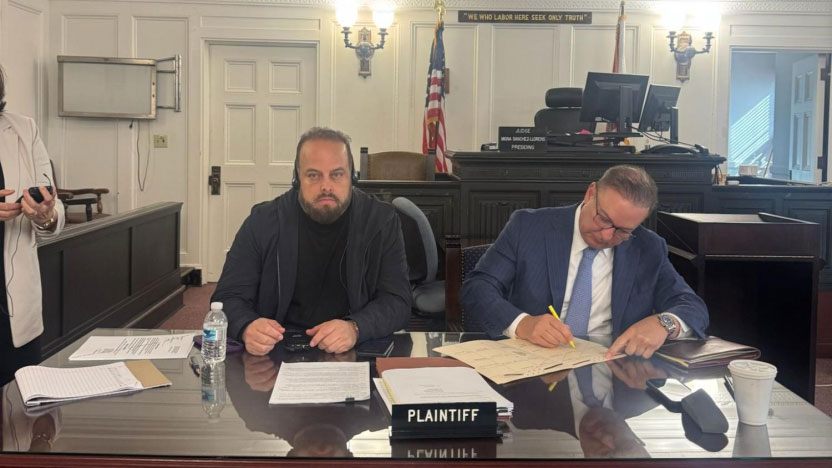
Ecuador has formally asked the United States to extradite Xavier Jordán, one of the principal defendants in the Metástasis organized-crime case, but obtaining the request may prove far more difficult than securing it.
The National Court of Justice completed the extradition request on July 14, 2026, advancing a process that prosecutors had pursued for months. Jordán is wanted in connection with the sprawling investigation that uncovered alleged links among public officials, judges, lawyers, prison figures and the criminal organization surrounding drug trafficker Leandro Norero.
The formal request represents a significant procedural step for Ecuadorian authorities. Yet the experiences of other prominent Ecuadorians who established themselves in the United States suggest that even a conviction, an arrest warrant or an international alert may not be enough to bring a defendant home.
Former Comptroller General Carlos Pólit remained in Florida despite Ecuador’s extradition request and an apparent willingness to be returned. Former Interior Minister José Serrano obtained protection against removal to Ecuador even after his asylum application was denied. Former President Jamil Mahuad continues to live in the United States despite an Ecuadorian prison sentence, while years of attempts to extradite brothers William and Roberto Isaías Dassum ended in repeated rejection.
Taken together, the cases illustrate the legal maze now confronting Ecuador in its pursuit of Jordán.
A defendant who left before the major cases emerged
Jordán departed Ecuador through Guayaquil’s airport on February 2, 2020, traveling to Miami as authorities investigated an alleged corruption scheme involving medical supplies purchased for public hospitals.
He has remained in the United States while Ecuadorian courts issued three arrest warrants against him in separate proceedings. The most consequential is tied to Metástasis, the investigation launched after information recovered from Norero’s mobile phones exposed what prosecutors described as an extensive network of corruption and criminal influence.
Jordán’s lawyers began building an immigration defense before Ecuador’s extradition machinery was completed. In January 2024, U.S. attorney Richard Díaz confirmed that Jordán had applied for political asylum.
That pending application could delay any effort to place him in Ecuadorian custody. An asylum claim does not automatically defeat an extradition request, but it can produce additional hearings, appeals and arguments over whether the prosecution is politically motivated or whether the defendant would face persecution if returned.
Díaz has publicly expressed confidence that Jordán will not be handed over, arguing that he sees no realistic legal or diplomatic route through which the United States would approve the extradition.
Ecuador must now convince American authorities that the allegations involve ordinary criminal conduct covered by the extradition relationship between the two countries, rather than political persecution. It must also submit evidence in a form that satisfies U.S. legal standards, which may differ significantly from the requirements used to order an arrest in Ecuador.
Serrano demonstrates the reach of humanitarian protection
The case of former Interior Minister José Serrano shows how immigration law can prevent a person’s return even when political asylum itself is rejected.
Serrano was detained by U.S. Immigration and Customs Enforcement on August 7, 2025, after remaining in the country beyond the validity of his tourist visa. From immigration custody, he applied for asylum.
Immigration Judge Romy Lerner denied that request on May 13, 2026. Ordinarily, such a ruling could have cleared the way for deportation. Instead, the judge granted Serrano protection under the United Nations Convention Against Torture.
The protection, commonly known as CAT relief, prevents the United States from removing a person to a country where a judge finds that the individual would probably face torture. Unlike asylum, it does not necessarily provide a path to permanent legal residence or broad immigration benefits. It can nevertheless block deportation to the country seeking the person.
The ruling therefore created an unusual situation: Serrano lost his bid for political asylum but remained protected from being sent to Ecuador.
Serrano is wanted by Ecuadorian authorities in the investigation into the 2023 assassination of presidential candidate and former lawmaker Fernando Villavicencio. Jordán is also wanted in that case, adding another layer of complexity to the proceedings against him.
U.S. authorities have continued holding Serrano, with the Department of Homeland Security saying he failed to prove that he did not represent a danger to the community. His lawyers filed a federal habeas corpus petition in June 2026 in the Southern District of Florida, seeking his release on bail.
The dispute highlights how extradition, deportation and immigration detention operate through different legal systems. Even when Ecuador wants the same result — the return of a wanted person — the outcome may be determined by an immigration judge, a federal district court, the State Department or the U.S. Department of Justice.
American charges can take priority
Carlos Pólit’s case reveals a different obstacle: the United States may decide to prosecute a suspect itself before considering Ecuador’s request.
Pólit traveled to the United States in May 2017 while on leave as comptroller general and later resigned. Ecuador’s National Court of Justice requested his extradition on July 26, 2018.
By then, Pólit had been sentenced in Ecuador to six years in prison for extortion connected to the Odebrecht bribery scandal. Ecuadorian prosecutors said he demanded $10.1 million in exchange for eliminating or modifying damaging audit findings involving the Brazilian construction company.
Pólit later signed a waiver indicating that he would not challenge extradition to Ecuador. Even that step did not lead to his return.
U.S. investigators had discovered that money linked to the corruption scheme had passed through Florida bank accounts, corporations and real-estate transactions. Because the alleged laundering touched the American financial system, federal prosecutors pursued their own case.
A jury convicted Pólit of participating in a scheme that laundered $16.5 million in bribe proceeds through the United States, including transactions carried out with the assistance of his son.
On October 1, 2024, U.S. District Judge Kathleen Williams sentenced him to 10 years in federal prison, followed by three years of supervised release. Once the United States obtained its own conviction and prison sentence, Ecuador’s extradition effort effectively ceased to be the immediate priority.
The Pólit case demonstrates that cooperation with extradition does not guarantee transfer when American prosecutors assert jurisdiction. A person can be wanted in Ecuador, agree to return and still remain in the United States because a federal criminal case takes precedence.
Ecuador has also struggled to recover the financial penalties imposed against the former comptroller. Courts ordered Pólit to pay $40.4 million in full reparations to the Ecuadorian state, but the assets recovered have represented only a fraction of that amount.
As of October 2025, authorities had seized three properties in Quito’s La Floresta neighborhood belonging to Pólit. Their combined value was reported at $87,876, leaving almost the entire reparation order unpaid.
Evidence rejected despite repeated requests
The long-running Isaías case shows that the United States may reject an extradition request when it considers the supporting evidence insufficient.
William and Roberto Isaías Dassum, former owners of the collapsed Filanbanco bank, have lived in the United States since 2000. Ecuadorian governments repeatedly attempted to secure their return, arguing that the brothers were responsible for financial crimes connected to the bank’s failure and the state resources used during Ecuador’s banking crisis.
The United States rejected Ecuador’s extradition efforts three times.
In one of the most important decisions, the U.S. State Department issued a diplomatic note in 2013 saying Ecuador had not presented sufficient evidence of embezzlement or misappropriation. The rejection underscored a central difficulty in international extradition: evidence considered persuasive by an Ecuadorian court may not satisfy the standards applied by U.S. officials.
Authorities later tried another route. ICE detained the brothers at the Krome immigration facility in Florida on February 13, 2019, based on alleged immigration violations.
That effort also failed to produce their return. Federal Judge Kathleen Williams and Immigration Judge María López H. granted them habeas corpus relief and bail on March 15, 2019.
Two years later, the legal foundation for extradition weakened further. In May 2021, Ecuador’s National Court restored the brothers’ presumption of innocence, effectively ending the criminal status that had driven the long campaign to bring them back.
Interpol alerts offer no guarantee
Former President Jamil Mahuad represents yet another category of unsuccessful international pursuit.
Mahuad was ultimately sentenced in October 2020 to eight years in prison for embezzlement over decisions made during the 1999 financial crisis, including decrees that imposed the bank holiday and froze deposits. The episode contributed to severe economic and political instability and preceded Ecuador’s adoption of the U.S. dollar.
Despite the conviction, Mahuad has continued living in the United States.
Ecuador repeatedly sought Interpol assistance to detain him, but the international police organization declined to issue or maintain the requested alerts. Interpol can reject notices when it determines that a case may involve political considerations or does not comply with the organization’s rules.
Without an effective Interpol notice and without cooperation from American authorities, the Ecuadorian sentence has had little practical effect outside the country.
Mahuad’s case is an example of the difference between a domestic judgment and international enforcement. An Ecuadorian court can convict and sentence a former official, but it cannot compel a foreign government to make an arrest unless the case meets that government’s legal and evidentiary requirements.
Jordán’s battle could unfold on several fronts
The request for Jordán may now move through diplomatic review, federal court proceedings and immigration litigation, all of which could take years.
American authorities will examine whether the alleged offenses qualify for extradition, whether Ecuador has supplied sufficient evidence and whether any political or humanitarian protections apply. Jordán’s asylum claim may generate separate proceedings that continue even as the extradition request is evaluated.
His attorneys could also challenge the legality of detention, contest the evidence submitted by Ecuador or argue that prison conditions and security risks make his removal unsafe. Ecuador, meanwhile, may have to answer questions about the independence of the prosecution, Jordán’s treatment if returned and the conditions under which he would be detained.
The outcome could also depend on whether U.S. investigators have identified conduct within their own jurisdiction. Should American authorities uncover financial transactions, money laundering or other alleged crimes involving the United States, the Pólit precedent suggests that a federal prosecution could overtake Ecuador’s request.
For Ecuadorian prosecutors, formalizing the extradition petition was necessary. It ensured that Jordán’s continued residence abroad would not prevent the government from attempting to bring him before an Ecuadorian court.
But the histories of Pólit, Serrano, Mahuad and the Isaías brothers show that filing the request is often the simplest part. The decisive arguments will be heard inside American immigration offices, diplomatic agencies and federal courtrooms, where Ecuador’s arrest warrants carry weight but do not control the result.
0 Comments