
Lawmakers back regulation in principle while pressing for changes to safeguards, oversight and access.
Ecuador’s National Assembly has taken its first formal step toward regulating euthanasia, opening debate on a bill designed to set the legal, medical and administrative framework for a procedure that until now has rested largely on court decisions and subsequent regulations.
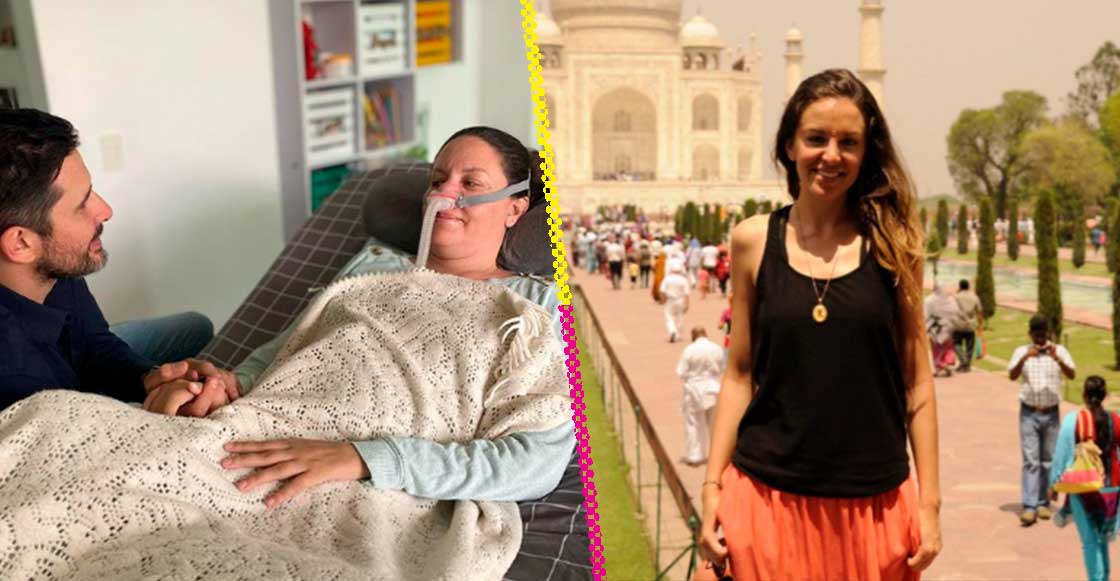
The proposal, discussed by the full Assembly on March 24th, comes two years after the death of Paola Roldán, whose legal fight helped force Ecuador to confront one of the country’s most difficult and intimate public policy questions: under what conditions a person suffering unbearably from a grave and irreversible illness should be allowed to choose a medically assisted death.
The bill, prepared by the Assembly’s Health Commission, lays out the conditions under which euthanasia could be requested, the steps the health system would have to follow once a request is made, and the responsibilities of the state, patients, families and medical professionals involved in the process. Although the first debate showed broad support for moving ahead, lawmakers from across the political spectrum also made clear that the text will need revisions before returning to the floor.
From court ruling to legislation
Health Commission president Juan Reyes said the proposed law is rooted in the Constitutional Court ruling that responded to Roldán’s appeal. Roldán, who suffered from a rare form of amyotrophic lateral sclerosis, became the public face of a national debate over whether Ecuadorian law should continue criminalizing euthanasia in cases of extreme suffering and irreversible decline.
Her case led to the decriminalization of euthanasia under specific circumstances and prompted the creation of regulations that have already been used in at least one case involving a woman with terminal cancer in Guayaquil. But Reyes argued that regulations alone are not enough.
He told legislators that a formal law is needed to provide legal certainty not only for patients seeking the procedure, but also for relatives and healthcare workers who must navigate decisions that are medically complex, emotionally fraught and legally sensitive.
The draft under discussion contains 51 articles and attempts to translate the court’s principles into a detailed legal structure. Rather than leaving each case to a patchwork of interpretation, lawmakers are trying to spell out who qualifies, how consent must be established, what information patients must receive and how the health system must respond.
Who could qualify
The bill sets out a series of requirements for anyone seeking access to euthanasia. A person would have to be an adult and demonstrate the ability to understand the decision and express a free, informed, explicit and uncoerced will.
The proposal also requires that the person suffer from either a serious and incurable illness or a grave and irreversible bodily injury, with that condition supported by a definitive diagnosis from physicians. The person must also be experiencing intense suffering resulting from that condition.
In addition, the draft says the patient must have received sufficient and understandable information about diagnosis, prognosis, treatment options, risks, consequences and palliative care. The request would have to be stated freely and unequivocally, including the patient’s position on whether to accept or reject therapeutic alternatives and palliative care measures.
The bill would also limit access to Ecuadorian citizens and permanent residents.
Those criteria are intended to narrow eligibility and reduce ambiguity, particularly in a country where access to healthcare is often uneven and where lawmakers remain wary of approving a law that could later be accused either of being too restrictive or too loosely written.
Two paths for a request
One of the more significant features of the proposal is that it recognizes two ways a euthanasia request could be made.
The first is a direct voluntary request, in which a person makes the decision while fully capable of understanding and expressing it.
The second is an advance voluntary request. In that case, a person facing a grave and irreversible illness or injury could leave written instructions in advance, anticipating a future point at which their condition might deteriorate so severely that they are no longer able to communicate their wishes.
That distinction reflects a core issue in cases involving progressive diseases, where a patient may still have legal and mental capacity at one stage of illness but not at another. By allowing an advance declaration, the bill attempts to address the problem before it becomes a crisis for families and doctors.
Once a request reaches health authorities, the proposed law would trigger a set of protocols that include psychological support, palliative care and other forms of assistance. The bill also explicitly allows for the possibility that a patient, after receiving that support and information, could decide to withdraw the request.
That provision became an important point during debate, as lawmakers stressed that regulation is not meant to funnel patients toward euthanasia, but to ensure that any such decision is informed, voluntary and revocable.
Broad support, but not a blank check
The first debate suggested that the Assembly is not deeply divided over whether some legal framework is necessary. Legislators from different blocs largely agreed that the issue should not be reduced to ideology, religion or partisan identity.
Several lawmakers framed the discussion instead as one of dignity, suffering and the state’s obligation to respond to realities already present in the country’s health system. The debate, at least in its opening stage, was marked more by questions about procedure and safeguards than by outright rejection of the concept itself.
Government-aligned legislator María Molina said her office had received official information showing that 16 people in Ecuador had sought information in recent months about how to access euthanasia. That figure, while small in national terms, underscored the point repeatedly made during the session: this is no longer a hypothetical discussion.
For supporters of the bill, those inquiries are evidence that the state needs clearer rules. For more cautious lawmakers, they are a reminder that once the law is in place, each case will demand scrutiny and public trust in the process.
The health system question
Not all of the criticism focused on euthanasia itself. Some legislators used the debate to highlight the country’s deeper healthcare failures.
Cristina Jácome of Citizen Revolution said the law cannot be discussed in isolation from the state’s responsibility to ensure medicines, doctors and timely treatment in the public health system. Her argument pointed to a moral and political tension running beneath the debate: a country should not create a path to euthanasia while still failing to guarantee adequate care for people who might choose to keep fighting their illness if treatment were accessible earlier and more consistently.
She argued that many patients reach the point of irreversible disease only after late diagnoses or delayed access to care. In that context, the question for lawmakers is not only whether euthanasia should be regulated, but whether patients are truly being given all meaningful alternatives before making such a choice.
That concern is likely to remain central as the bill moves forward, especially because opponents or skeptics may argue that consent is shaped not just by illness, but by the quality or absence of available medical support.
What lawmakers want changed
Even among those who broadly supported the proposal, there was no suggestion that the draft is ready to become law without revision.
Viviana Veloz, also of Citizen Revolution, said the second-debate report should address what she sees as weak points in the current text, including oversight after procedures are carried out and what she described as an overly bureaucratic process. Her remarks highlighted the tightrope lawmakers are trying to walk: too little control could raise fears of abuse, while too much paperwork and delay could make the law unworkable for patients facing advanced suffering.
That tension is likely to define the next stage of the legislative process. A law of this kind must satisfy demands for strict safeguards, medical review and transparency, while also recognizing that people seeking euthanasia are often in situations where time, physical strength and emotional endurance are already in short supply.
After nearly two hours of debate, Assembly President Niels Olsen ordered the bill returned to the Health Committee so lawmakers’ observations and proposed changes can be incorporated into a revised report. When it returns for second debate, the Assembly will have to decide whether it can turn a landmark court decision into a law that is both humane in principle and workable in practice.
0 Comments