
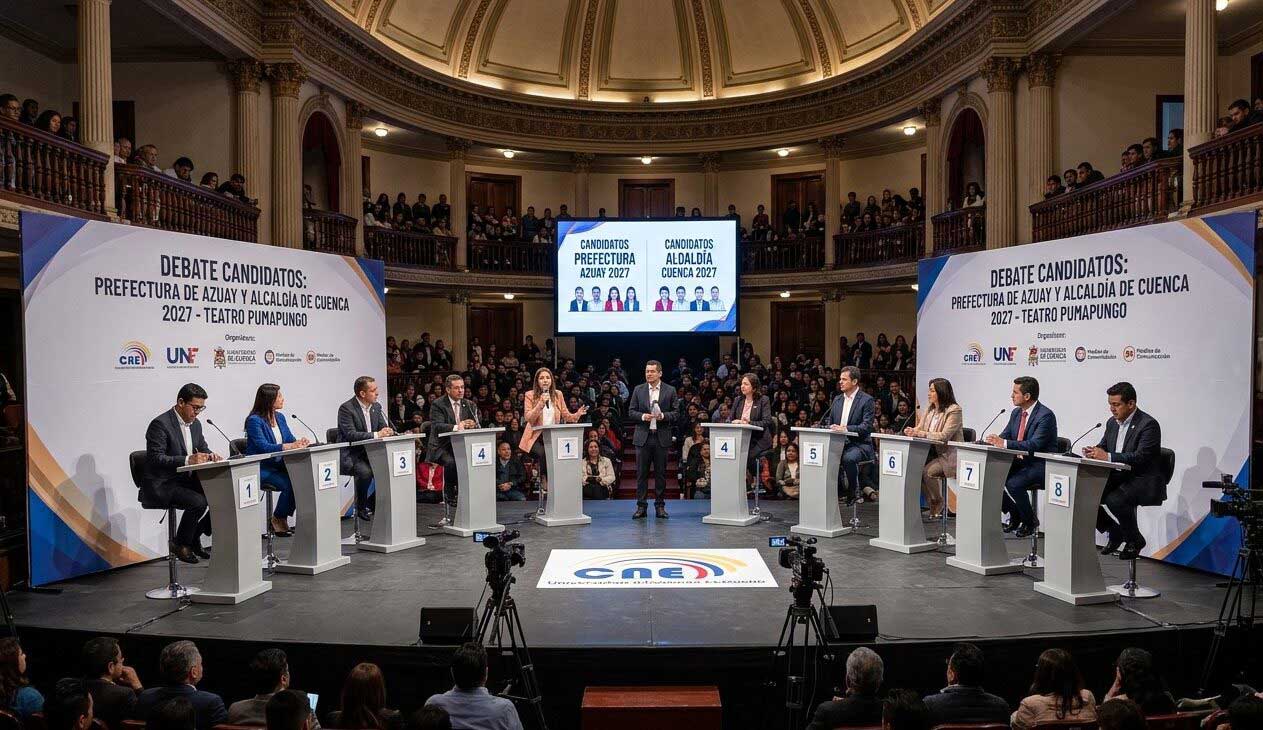
Eight prefecture candidates and nine mayoral hopefuls appeared in the final campaign stretch at Cuenca’s Pumapungo theater.
Azuay’s eight candidates for prefect put water protection and mining at the center of their November 20th debate, presenting sharply different approaches to protecting the páramo, monitoring rivers and exercising provincial authority. On the same evening, nine candidates for Cuenca mayor addressed development, security and municipal finances at a separate debate organized by Ecuador’s National Electoral Council.
The two contests will be decided on November 29th. Candidates met at Teatro Pumapungo in Cuenca, with the prefecture forum beginning in the afternoon and the mayoral candidates divided into groups later in the evening. The debates were part of the CNE’s nationwide series for local-government races.
Azuay’s prefecture candidates were Sebastián Cevallos, Gabriela Ochoa, Paolo Carpio, Gustavo Sánchez, Ángel Cartuche, Consuelo Orellana, David López and Pablo Webster. The prefecture administers provincial roads, irrigation projects and other matters beyond municipal boundaries; those responsibilities shaped many of the proposals.
The Loma Larga mining project and the páramo around Quimsacocha featured prominently. Orellana and Carpio said they would oppose Loma Larga. Cartuche argued for strengthening community organization to defend water and coordinating indigenous justice, ordinary courts and law enforcement against illegal activity. Cevallos proposed a provincial security council and road patrols, prompting Orellana to point out that a provincial security committee already exists and to question the scope of a prefect’s powers.
From satellite sensors to irrigation systems
López outlined a proposed network called “Centinelas del páramo.” It would use sensors connected through satellite internet to monitor water quality and potentially detect heavy metals or illegal mining activity. This was a campaign proposal, not an operating provincial monitoring system.
Sánchez proposed spending approximately $4 million on more than 30 irrigation systems. He also discussed protection of wetlands and forests through agreements and potential land purchases. Webster emphasized native-forest restoration through collective community work, or mingas, linking land conservation with agriculture and food production.
The mayoral field comprised Leonardo Morales, Paúl Carrasco, Juan Cristóbal Lloret, Yaku Pérez, Pedro Palacios, Diana Mera, Marcelo Cabrera, Juan Pablo Riquetti and Juan Carlos Vega. The municipal candidates discussed proposals including the use of citizens’ mobile phones for security reporting, possible commercial redevelopment around 9 de Octubre, and approaches to purchasing land to protect water catchments.
The distinction between provincial and municipal responsibilities is important in evaluating what candidates could actually carry out. Cuenca’s mayor oversees city services and municipal companies; the prefecture controls different infrastructure and rural development responsibilities. National agencies retain authority over policing and many mining permits. The debates made these differences visible when candidates challenged each other’s proposed powers.
The CNE scheduled 45 compulsory candidate debates nationally—21 for prefectures and 24 for mayoralties. Its campaign timetable runs through November 26th, followed by electoral silence before Sunday’s vote. The newly elected local authorities are expected to take office in May 2027.
With less than a week remaining, the debates provided voters with proposals they can compare against budgets, existing responsibilities and the candidates’ subsequent governing decisions.
0 Comments