
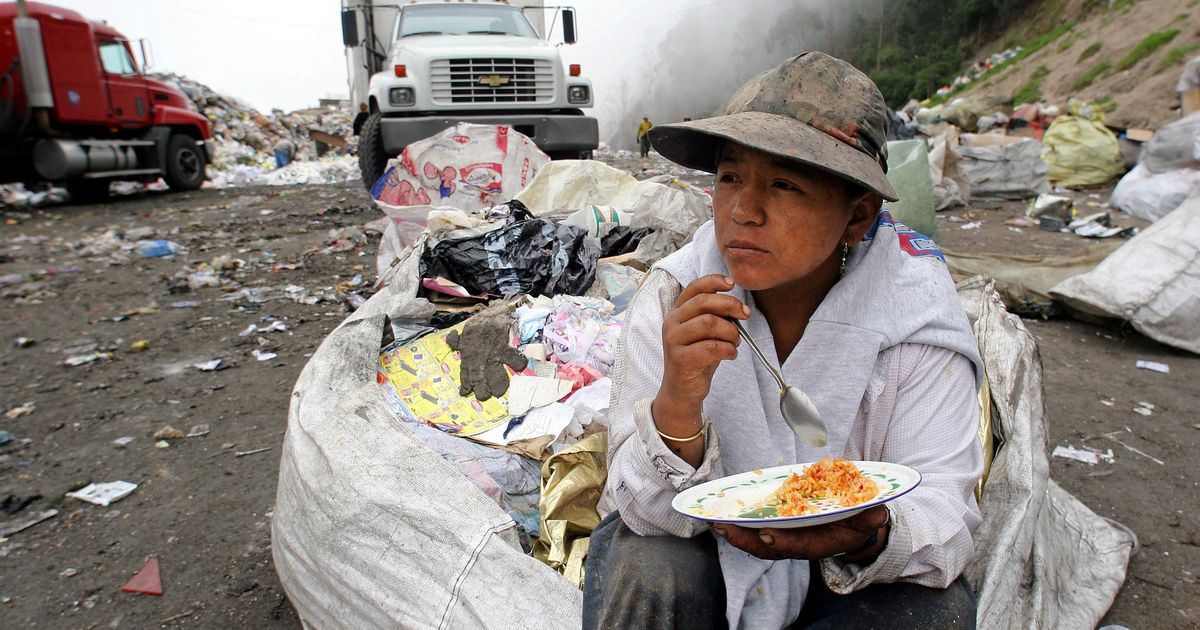
Social gains help hold the country up, but weak institutions and a narrow economy drag it down.
Ecuador posted economic growth of 3.7% in 2025, according to figures recently released by the Central Bank, but a new regional prosperity study suggests that headline number tells only part of the story. Beneath the growth rate, the country remains held back by institutional weakness, low-value production, and a limited ability to translate economic activity into broader national well-being.
That is the picture painted by the 2026 Latin America and Caribbean Prosperity Ranking produced by the World Competitiveness Center, which evaluates 34 economies across the region. Ecuador received an overall rating of B2, placing it in the middle range rather than at either extreme. But the report argues that the country’s position is more fragile than that label might suggest, because its better results in social indicators mask deeper problems in the economic, institutional, and managerial areas.
The ranking is based on 78 indicators grouped into four major pillars: economic challenges, governance and institutions, social empowerment, and managerial dynamics. Countries are then placed into eight categories ranging from A1, the strongest level, to D2, the weakest. The study says prosperity in Latin America and the Caribbean remains highly uneven, with countries scattered across nearly every level and few displaying balanced strength in all four areas.
Growth without enough depth
For Ecuador, the report suggests that recent economic expansion has not yet translated into the kind of structural strength needed to secure long-term prosperity. While the country did grow in 2025, it continues to depend heavily on a relatively small group of primary exports, especially oil, shrimp, and bananas. That dependence leaves the economy exposed to swings in international demand and prices while limiting the development of a broader productive base.
The report points to Ecuador’s GDP per capita of $16,805, which placed it 24th among the 34 economies studied and well below the regional average of $25,882. Gross fixed capital formation, a measure tied to investment in infrastructure, machinery, and productive assets, stood at 18.86% of GDP, ranking Ecuador 20th. Those numbers suggest an economy that still struggles to expand its productive capacity and generate the kinds of opportunities that lead to higher, more durable living standards.
The concern is not simply that Ecuador produces too little, but that too much of what it produces remains concentrated in sectors with limited value added. Economies that climb higher in prosperity rankings tend to diversify, attract investment into more advanced industries, and improve their ability to generate innovation, productivity, and skilled employment. Ecuador, according to the report, has not yet made that leap.
Strong social indicators soften the blow
If Ecuador avoided falling into a lower overall category, it was largely because of its social performance. The report identifies this as the country’s clearest source of resilience and the pillar that most distinguishes it from weaker-performing peers.
Life expectancy at birth reached 77.39 years, ranking 11th in the region. The illiteracy rate stood at 6%, placing Ecuador 15th, while youth exclusion came in at 18.95%, ranking 12th. Taken together, those figures suggest that Ecuador has maintained human development conditions that are stronger than might be expected from its income level alone.
That matters because prosperity, as the ranking defines it, is not measured only by economic growth or business activity. It is also shaped by whether people are healthy, educated, and socially included. Ecuador’s relative strength in these areas has helped prevent its broader weaknesses from dragging it further down the regional ladder.
Still, the report makes clear that social progress on its own cannot compensate indefinitely for structural shortcomings elsewhere. A country may show decent outcomes in education or health, but if it cannot create stronger institutions, attract investment, and build a more modern productive economy, those social gains may become harder to sustain.
Institutions remain a major obstacle
The report identifies governance and institutional performance as one of Ecuador’s most serious vulnerabilities. In this pillar, the country received a C1 rating, making it one of the weakest elements in its overall profile.
Among the indicators cited were a rule of law score of 0.46, ranking 22nd, and a democracy index score of 5.24, ranking 17th. Those figures point to a state that continues to struggle with enforcement, predictability, and public confidence. In practical terms, that can make it harder to attract investment, harder to plan for the long term, and harder to build trust between citizens, businesses, and government.
Those concerns are compounded by Ecuador’s ongoing security crisis, which has reshaped daily life and become one of the country’s defining political and economic challenges. The report suggests that institutional fragility and insecurity reinforce one another. Weak institutions make it more difficult to respond effectively to violence and disorder, while the security crisis itself damages social cohesion and discourages productive activity.
For investors and entrepreneurs, that creates a climate of uncertainty. For ordinary citizens, it deepens the sense that formal systems are not functioning as they should. And for the country as a whole, it makes upward movement in the prosperity rankings far more difficult.
A ceiling on higher-value growth
Ecuador’s weakest pillar in the study was managerial dynamics, where it received a C2 rating. That category looks at factors tied to business capacity, competitiveness, and the ability to move toward more sophisticated forms of production.
The report notes that Ecuador posted overall productivity of $29,898 in GDP per worker and ranked 14th in high-tech exports, which accounted for 7.3% of total exports. Those figures show some areas of potential, but not enough to offset the broader conclusion that the country still lacks the managerial and business dynamism needed to consistently generate higher-value economic activity.
In other words, Ecuador is not starting from zero, but it remains far from the point where innovation, productivity, and advanced industry are driving national performance. Without progress in that area, the country risks remaining stuck in the middle—too socially developed to be counted among the weakest, but too economically and institutionally constrained to join the strongest performers.
That is ultimately what the B2 rating appears to represent: not stability, but tension. Ecuador’s social indicators are giving the country a cushion, but the report makes clear that cushion is carrying more weight than it should. If the economy remains narrow, if institutions remain weak, and if business development continues to lag, then growth figures alone will not be enough to change the country’s place in the region.
Ecuadorians need jobs! Ecuadorians will have a recall vote on May 1 Millions of Ecuadorians will sign. We must support them!