
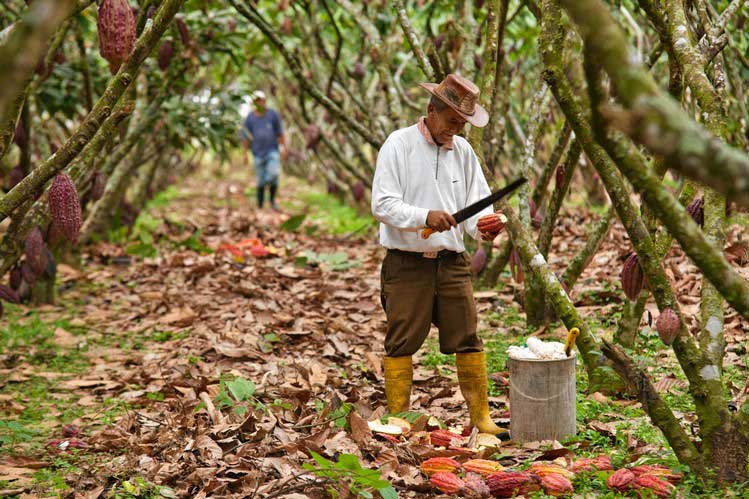
Climate risks are reshaping global supplies as cocoa, coffee, bananas and rice face growing volatility.
Ecuador’s exporters are entering a period of unusual uncertainty as the expected arrival of El Niño begins to influence international commodity markets long before its strongest weather effects are felt.
The activation of an orange alert for the climate phenomenon has increased concern across the agricultural sector, particularly in coastal provinces where flooding, excessive rainfall and crop disease could disrupt production. At the same time, weather problems in other major producing countries are creating the possibility that prices for some Ecuadorian exports could rise even as local farmers face higher costs and greater production risks.
Cocoa, coffee and bananas are among the products receiving the most attention. Rice markets are also being closely watched because of the crop’s sensitivity to changing rainfall patterns in Asia and the possibility that major producing countries could restrict exports if harvests deteriorate.
The result is a complicated outlook in which Ecuador could benefit from higher international prices while simultaneously struggling to maintain export volumes.
Markets react before the weather arrives
Commodity markets often begin responding to El Niño forecasts months before the climate event directly affects harvests. Traders purchase futures contracts and other financial instruments based on expectations that droughts, floods or extreme temperatures will reduce global supplies.
Analysts describe the financial effects as unfolding in three broad stages.
The first stage is driven largely by speculation in futures markets. Contracts for cocoa, coffee, sugar, wheat and other agricultural products can rise as investors anticipate weaker harvests.
The second stage begins when the predicted supply problems appear in physical markets. Harvest volumes decline, inventories become tighter and exporters have difficulty fulfilling existing orders.
The third stage reaches consumers. Higher raw material and transportation costs are gradually transferred to processed foods, supermarket prices and restaurant menus. That process can take between 12 and 20 months, meaning the inflationary consequences of the 2026 climate event could continue well into the following year.
The size of the impact will vary significantly by crop and region. Some countries may suffer production losses, while others could gain market share or receive higher prices for available supplies.
Cocoa returns to the spotlight
Cocoa is one of the clearest examples of how quickly climate expectations can move markets.
After previously reaching historic levels of between $10,000 and $12,000 per metric ton, international prices later retreated. By July 24th, cocoa was trading near $5,400 per ton.
That decline has not eliminated the possibility of another sharp increase.
Traders are again purchasing contracts in anticipation of potential drought conditions in West Africa, particularly in Ivory Coast and Ghana, the world’s two most important cocoa-producing countries. A strong El Niño could reduce rainfall or disturb growing conditions during crucial stages of the crop cycle, limiting the harvest available near the end of the year.
International cocoa prices rose 8.1% during the latest month measured and 56.6% over six months, reflecting how sensitive the market remains to supply concerns.
For Ecuador, which has become an increasingly important producer of fine-aroma cocoa as well as larger-volume commercial varieties, another price increase could raise export revenue. However, those gains would depend on local farms avoiding serious flood damage, transportation interruptions or disease outbreaks.
Excessive rainfall can affect flowering, increase fungal disease and make it harder to dry harvested beans to export standards. Roads and collection centers in rural areas may also become difficult to access during prolonged storms.
Coffee prices supported by shortages abroad
Coffee markets are being influenced by weather conditions across several continents.
Unseasonably high temperatures and extreme heat in Vietnam and Indonesia have reduced supplies of Robusta coffee, a variety widely used in instant coffee and commercial blends. With less Robusta available, buyers have shifted some demand toward Arabica coffee produced in Latin America.
At the close of trading on July 24th, coffee prices were around $3.12 to $3.14 per pound. Markets were being supported by concerns about high temperatures in Brazil and continued supply shortages in Southeast Asia.
Coffee prices rose about 13.2% during the preceding month and 6.41% during the first half of the year.
Ecuador is not one of the world’s largest coffee exporters, but higher global prices could improve opportunities for producers who have struggled with high costs, limited financing and aging plantations. Specialty coffee growers could also benefit if international roasters seek new sources of Arabica beans.
Still, the same climate conditions that support prices may threaten domestic output. Excess rainfall can damage flowers and coffee cherries, while landslides or deteriorating rural roads can interrupt collection from mountain-producing areas.
Banana sector faces weather and disease risks
Bananas present one of the most difficult challenges because Ecuador is the world’s leading exporter and the crop is concentrated in coastal provinces expected to face some of the most severe effects of El Niño.
Changes in rainfall and temperature can reduce plantation yields, damage fruit and increase the spread of diseases. Heavy rains can also affect drainage systems, weaken plants and make farm access more difficult.
The sector is already confronting renewed concern over Fusarium tropical race 4, known as Fusarium R4T. A new case was detected on a banana farm in the El Quemado sector of El Oro, near the property where Ecuador’s first confirmed outbreak was reported in December 2025.
The location is especially sensitive because El Oro is one of Ecuador’s most important banana-producing provinces. The detection has increased pressure on growers to strengthen controls on the movement of workers, vehicles, soil, tools and planting material.
El Niño conditions could make containment more difficult if flooding spreads contaminated soil or water between properties.
Banana exporters are also dealing with rising production expenses. Minimum support prices per box have been increased to reflect the cost of farm inputs, labor, disease prevention, environmental standards and logistics required by buyers in Europe and North America.
The international spot price is currently estimated at about $1,185 per metric ton. However, banana prices do not always respond as quickly as cocoa or coffee because much of the trade is governed by annual contracts between exporters, supermarkets and distributors.
That means producers may face immediate weather-related costs without receiving equally rapid compensation from foreign buyers.
Rice markets watch Asia closely
Rice prices are being shaped primarily by developments in South and Southeast Asia, where India, Thailand and Vietnam play a central role in global supplies.
The crop is highly sensitive to disruptions in rainfall. Too little water can reduce yields, while excessive rainfall and flooding can destroy fields shortly before harvest.
Markets are also concerned that producing countries could introduce new export restrictions to protect domestic food supplies if harvest forecasts worsen. Such measures have previously caused rapid increases in international prices, particularly in countries that depend heavily on imported rice.
As of July 24th, rice futures were trading near $14 per quintal. Prices increased 2.45% during the latest month and 31.3% over six months.
Ecuador is both a rice producer and a country where the grain is a major part of household consumption. Higher global prices could support domestic farmers, but they could also increase food costs if local harvests are damaged and imports are needed to fill shortages.
Coastal rice-growing provinces are particularly exposed to flooding, making the timing and intensity of rainfall critical.
Higher prices may not mean higher profits
The central challenge for Ecuador is that rising commodity prices do not automatically produce greater profits.
Exporters benefit only if they have enough product to sell and can move it through ports and transportation networks. Flooded fields, damaged roads, disease controls and higher insurance or shipping costs can offset much of the advantage created by stronger prices.
Smaller producers are especially vulnerable because they often lack access to crop insurance, financing or storage facilities. They may be forced to sell quickly after harvest or absorb losses that larger exporters can manage through contracts and financial hedging.
International buyers may also become more demanding during periods of disruption, requiring exporters to guarantee delivery schedules or maintain quality standards despite difficult weather conditions.
For Ecuador’s agricultural sector, the coming months will therefore be shaped by two competing forces: the opportunity created by tighter global supplies and the threat posed by El Niño at home.
Cocoa and coffee exporters could see stronger demand as other producing regions struggle, while banana and rice growers may face a more direct battle against flooding, disease and rising costs. The balance will depend not only on international prices, but also on whether farms, highways, collection centers and ports can continue operating as the climate event develops.
0 Comments