
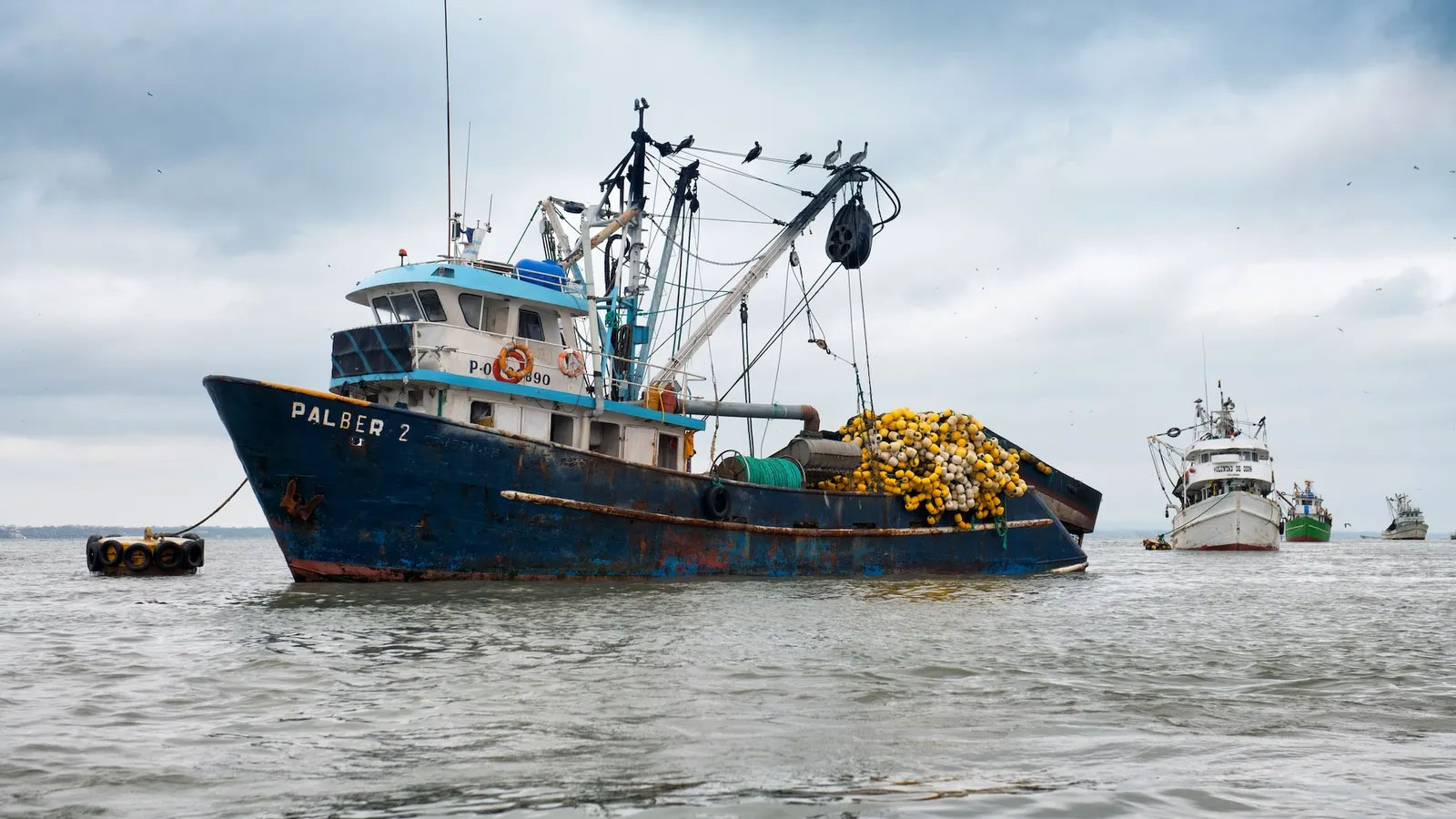
Warmer Pacific waters are disrupting fisheries, pushing some fish prices sharply higher while flooding the market with shrimp.
El Niño is no longer simply a forecast of what might happen to Ecuador later this year. Its effects are already showing up in the country’s fishing industry — and at seafood counters.
Ocean temperatures off Ecuador are running about 4.1 degrees Celsius above normal, according to the latest monitoring cited by Ecuador’s regional El Niño study committee. The unusually warm water is driving several commercially important fish species into cooler and deeper waters, making them harder and more expensive to catch.
In Manta, the result has been dramatic. Some fish that were plentiful only months ago now cost two to four times as much.
Fish are moving away
Dorado, picudo (large, billfish species with spear-like snouts—most commonly swordfish or blue marlin) and albacore are among the species becoming more difficult for fishermen to find.
The change is straightforward: as surface water warms, fish that prefer cooler conditions move into deeper water or migrate farther from traditional fishing areas. Boats must travel farther and spend more time and fuel searching for them, while catches decline.
The effect is being felt by both Ecuador’s industrial tuna fleet and artisanal fishermen.
During the first six months of 2026, Ecuador’s large tuna fleet caught 167,111 metric tons of tuna, down 30.8% from 241,594 tons during the same period last year. That was the largest decline among the six countries fishing for tuna in the eastern Pacific.
The industry now expects a difficult remainder of 2026 and beginning of 2027 for tuna and smaller pelagic species such as sardines.
Prices are climbing
Consumers are beginning to pay for the reduced supply.
At Manta’s Playita Mía seafood market, dorado that previously sold for around 40 cents a pound has recently reached as much as $1.70 — more than four times its earlier price. Gacho, another locally sold fish, is being offered whole for around $2.30 a pound and can reach $4 at retail.
Albacore presents a particularly Ecuadorian problem.
It is the traditional fish used in encebollado, one of the country’s most popular dishes. Fresh albacore has become increasingly difficult to obtain in Guayaquil, forcing some sellers to rely on frozen fish supplied by the industrial fleet.
The scarcity has already pushed up wholesale and retail prices. Picudo has also reached about $4.50 a pound wholesale and as much as $7 in neighborhood markets in Guayaquil.
But shrimp are everywhere
El Niño is producing almost the opposite problem for some shrimp fishermen.
At Puerto Engabao in Guayas, fishermen report unusually large catches of shrimp, including larger prawns. The supply has become so abundant that buyers and packing companies have struggled to absorb it.
Shrimp that fishermen might ordinarily expect to sell for considerably more has recently been fetching only about $1.80 to $2 a pound.
The unusual combination — scarce fish and abundant shrimp — demonstrates why El Niño cannot simply be described as “bad weather.” Changes in ocean temperature alter marine ecosystems differently depending on the species.
The effects will travel inland
For residents of Cuenca, changes occurring hundreds of kilometers away on the Pacific coast can seem distant. They will not necessarily stay there.
Much of the seafood sold in Cuenca arrives from coastal fishing ports. Higher wholesale prices, reduced catches and increased fuel costs eventually work their way through distributors, markets and restaurants.
And seafood is only one early indicator.
El Niño is expected to strengthen further during the final months of 2026. Government planning has focused heavily on the potential for flooding, damage to agriculture and interruptions to highways and other infrastructure.
For now, however, one of the clearest signs of what is happening is already visible at Ecuador’s fish markets: the Pacific has become warm enough to change what fishermen catch, how far they must travel to catch it — and what Ecuadorians pay when it reaches the table.
0 Comments