
Rising reservoir levels have paused blackouts, but Ecuador’s power supply remains tightly bound to rainfall and vulnerable to renewed dry conditions.
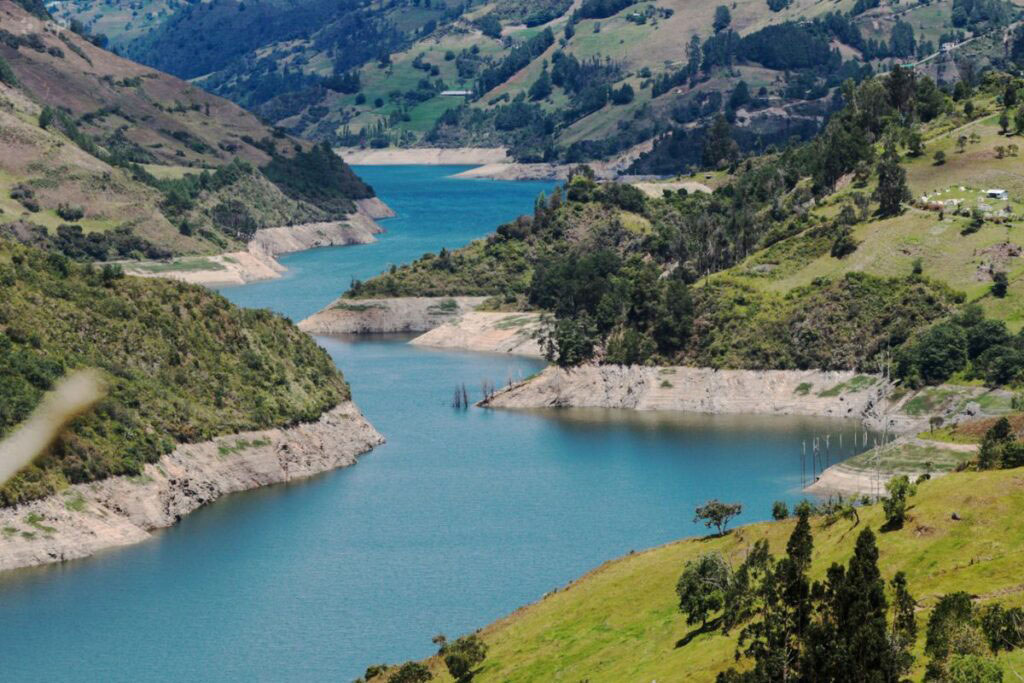
For the past three months, the most watched number in Ecuador hasn’t been the football score or the inflation rate—it has been the “cota” (water level) of the Mazar Reservoir.
Located deep in the eastern cordillera between Azuay and Cañar, it is the battery that powers the nation. Water from the Mazar powers the Paute Hydroelectric Complex, a system of three plants that together generate 1,756 megawatts — about 38 percent of Ecuador’s electricity supply. When it dies, we go dark.
The Current Situation
As of January 20, 2026, the level stands at 2,143.67 meters above sea level. This is a significant victory. Just weeks ago, in late December 2025, the level was flirting with the critical threshold of 2,114 meters, the point where sediment can damage the turbines and the entire Paute-Molino complex risks collapse.
Recent rainfall across the project’s area of influence — especially in Cuenca and surrounding areas of Azuay — has driven the recovery. The Tomebamba, Yanuncay, Tarqui, and Machángara rivers have returned to normal levels, easing conditions that only weeks ago had reached critical ranges. The heaviest rains began on January 12th.
Boots on the Ground: The Anxiety of Power
Based on this recovery, CENACE (the national grid operator) has suspended scheduled blackouts for mid-January. For the average resident and expat, this means a return to normalcy:
- Appliance Freedom: You can run the washing machine or the dryer without consulting a complex Excel spreadsheet of blackout times.
- Business Relief: Restaurants and small shops don’t have to burn expensive diesel in loud generators during the lunch rush, saving costs and reducing noise pollution.
- Internet Stability: No more dropping off Zoom calls because the neighborhood node lost power.
The Structural Fragility
However, energy experts warn against complacency. This is a reprieve, not a solution. The dry season will return later in the year. The government’s plan to bring in thermal barges and emergency generation is currently behind schedule. Ecuador remains dangerously over-reliant on hydroelectricity (over 70% of the matrix), making the entire economy dependent on the weather.
The “boots on the ground” advice for 2026 is simple:
- Don’t Unpack the Candles: Keep your power banks charged and your emergency lights ready. A dry February could reverse these gains in weeks.
- Surge Protection: The grid is stable now, but voltage spikes are common when power fluctuates or during storms. Invest in high-quality surge protectors for your expensive electronics (laptops, fridges).
- Water Backup: Remember that in many buildings, water pumps run on electricity. No power often means no water pressure. Keep a reserve.
We are currently one dry month away from being back in the dark. The structural deficit remains; we are simply enjoying a lucky break in the weather.
Sources:
- Primicias:(https://www.primicias.ec/economia/embalse-mazar-electricidad-ecuador-celec-apagones-cortes-luz-113604/)
- El Diario:(https://www.eldiario.ec/ecuador/embalse-de-mazar-recupera-nivel-de-agua-y-alcanza-2141-2-msnm-este-17-de-enero-de-2026-17012026/)
- El Comercio:(https://www.elcomercio.com/actualidad/negocios/embalse-mazar-recupera-tras-dias-criticos-para-sistema-electrico/)

0 Comments