

Correísmo’s resurgence brings back veteran politicians with controversial pasts, signaling potential legislative shifts and renewed political tensions in Ecuador.
The return of former ministers and officials once prominent during the Rafael Correa administration is reshaping the National Assembly, reviving a political movement that had seemingly faded in recent years. With the February 9, 2025, elections propelling key figures back into the spotlight, the resurgence of Correísmo signals a shift in Ecuador’s legislative landscape.
Correísmo’s Resurgence in the Assembly
The National Electoral Council (CNE) has yet to finalize the distribution of seats, but projections suggest that Correa’s party, the Citizen Revolution (RC), will secure at least 67 assembly members. Among those making a comeback are seasoned politicians and activists closely aligned with Correa’s ideological framework. While some new faces, such as Jahiren Noriega, Cristina Jácome, and Arisdely Parrales, are stepping into the Assembly, the more dogmatic wing of the movement is reinforced by the return of veteran figures.
Key Figures Making a Comeback

Ricardo Patiño: A Controversial Political Heavyweight
One of the most prominent returning figures is Ricardo Patiño Aroca, a long-time confidant of Correa. Having served as Minister of Defense, Economy, and Foreign Affairs, Patiño has remained a staunch supporter of the former president. During the campaign, he openly declared his intention to facilitate Correa’s return to Ecuador and secure the release of convicted political allies such as former Vice President Jorge Glas. Patiño’s political past is tainted by the ‘Pativideos’ scandal, where he was recorded discussing potential bond market manipulation. More recently, he fled to Mexico to avoid prosecution for allegedly inciting rebellion during the Moreno administration.
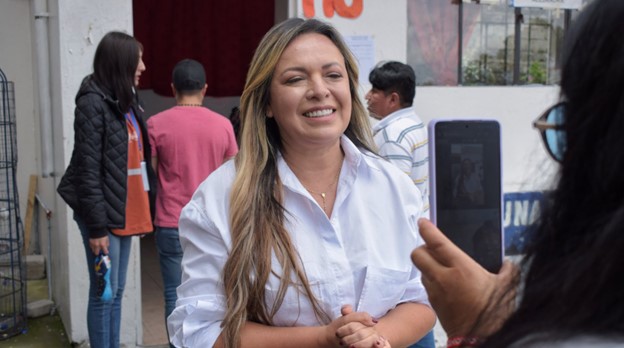
Ledy Zúñiga: The Justice Minister Under Scrutiny
Zúñiga, who served as Minister of Justice, returns to the Assembly amid lingering controversy over her role in the prison system and the investigation into the 2010 murder of General Jorge Gabela. Her tenure was marked by the introduction of electronic monitoring devices and her reading of a disputed report regarding Gabela’s death. While she claims to have presented only what was archived in the Ministry of Justice, her involvement remains a contentious issue.

Héctor Rodríguez: The Yachay Project’s Questioned Legacy
Rodríguez gained prominence as the head of the Yachay Public Company, an ambitious initiative to create a high-tech research hub. Despite promises of international collaborations and multimillion-dollar investments, the project largely fell short of expectations. Investigations into mismanagement followed, though Rodríguez successfully fought off the allegations. His return to the Assembly reignites debates over the legacy of Correa’s ‘emblematic’ education projects.

Xavier Lasso Mendoza: The Media Advocate Turned Politician
A staunch supporter of Correísmo, Xavier Lasso Mendoza is well known in Ecuadorian media and politics. His career took off during Correa’s administration when he hosted the interview program Palabra Suelta on Ecuador TV and contributed opinion pieces to El Telégrafo. He later represented Ecuador at the United Nations before briefly serving as Foreign Minister. Lasso has already stirred debate by proposing a new Communication Law, a move favored by the old guard of Correísmo but met with hesitation by some within the movement.
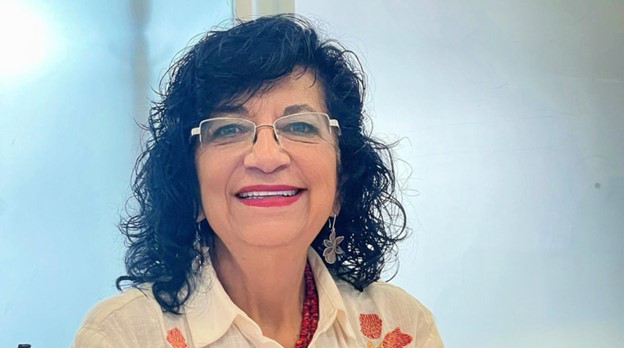
Liliana Durán: The Persistent Unionist
Unlike many political figures who shifted alliances over time, Liliana Durán has remained unwaveringly loyal to the Citizen Revolution. A former assembly member and coordinator of the Unión por la Esperanza (Unes) alliance, Durán’s roots lie in the labor movement, particularly with the Central Única de Trabajadores (CUT), which emerged during Correa’s presidency. She has consistently played a key role in coordinating legislative actions for the movement, making her return to the Assembly a natural continuation of her long-standing advocacy.
The Political Implications of Their Return
With Correa loyalists reclaiming legislative power, their presence is expected to shape Ecuador’s political agenda significantly. Their objectives range from reinstating defunct institutions, such as the Ministry of Justice, to pushing for a new media regulation law. However, their past controversies and ideological rigidity could spark renewed political tensions.
As Ecuador enters this new legislative period, the return of Correísmo’s old guard signals not just a revival of a political faction, but a potential clash between past policies and the country’s current governance challenges.

Get out the vote or have the past take over again and allow the cartels free reign in Ecuador!