

Efforts to preserve the heart of Cuenca’s heritage push forward despite challenges with materials and humidity damage
The Cathedral of the Immaculate Conception, located in Cuenca’s city center, is a monumental symbol for the region—its towering domes and stunning architecture are a testament to the area’s rich religious, cultural, and historical heritage. But after 143 years, the cathedral has begun to show signs of wear, with cracks and humidity threatening to undermine its beauty and integrity. The restoration of the Cathedral, which began 50 years after its dedication, aims to preserve this irreplaceable icon for future generations, ensuring it remains a beacon of faith and culture for the growing population of Cuenca.
Construction history and symbolic importance
The story of Cuenca’s cathedral spans nearly a century, from the initial materials being acquired in 1882 to its official completion in 1975. Though construction began under the direction of German architect Juan Bautista Stiehle in the late 19th century, the project was plagued by delays, budget issues, and the death of key figures. The cathedral was consecrated without towers due to the weight of the structure, and Cuenca’s unique building materials, while abundant, posed challenges for craftsmen. The dream of a dedicated cathedral for the city was finally realized after decades of intermittent work.
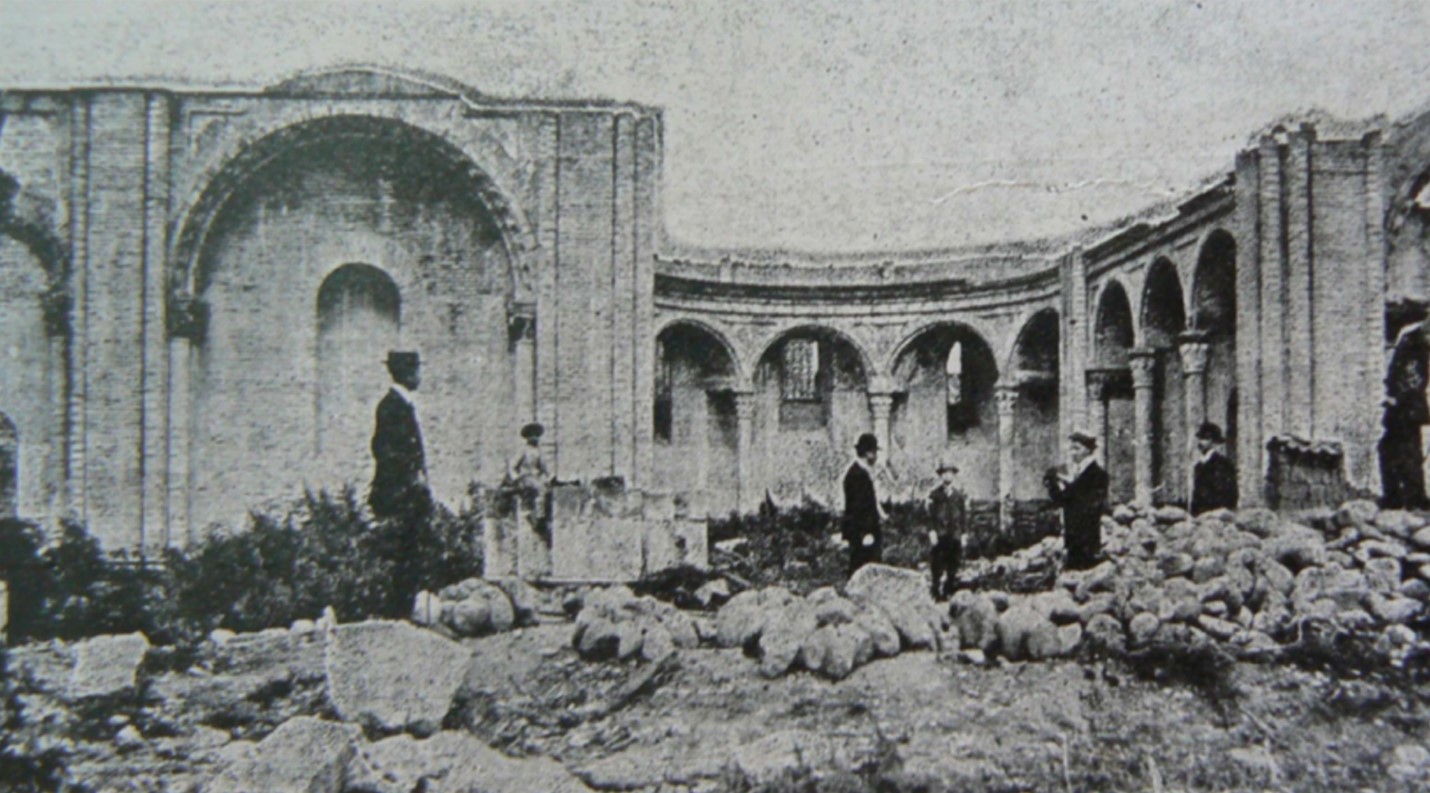
Photograph of the construction of Cuenca Cathedral published in the Commercial, Agricultural and Industrial Guide of 1909 and cited in the Historical Study of the New Cathedral. Taken from the Historical Study of the New Cathedral.
By 2025, Cuenca has grown from a small town of under 30,000 residents to a bustling city of around 600,000 people. The cathedral remains as one of the city’s most visited landmarks, drawing more than 225,000 attendees monthly to its masses and ceremonies. However, the infrastructure is now suffering the effects of time, and without significant intervention, further deterioration is inevitable.
The restoration process: Challenges and solutions
Over the past five decades, various minor repairs have been made to the cathedral, but the current restoration project, which began in earnest in 2024, is the most extensive. Architects, engineers, and preservationists are working meticulously to restore the 12 vaulted ceilings, the seven domes, and the deteriorating brickwork that has suffered from cracks and moisture.
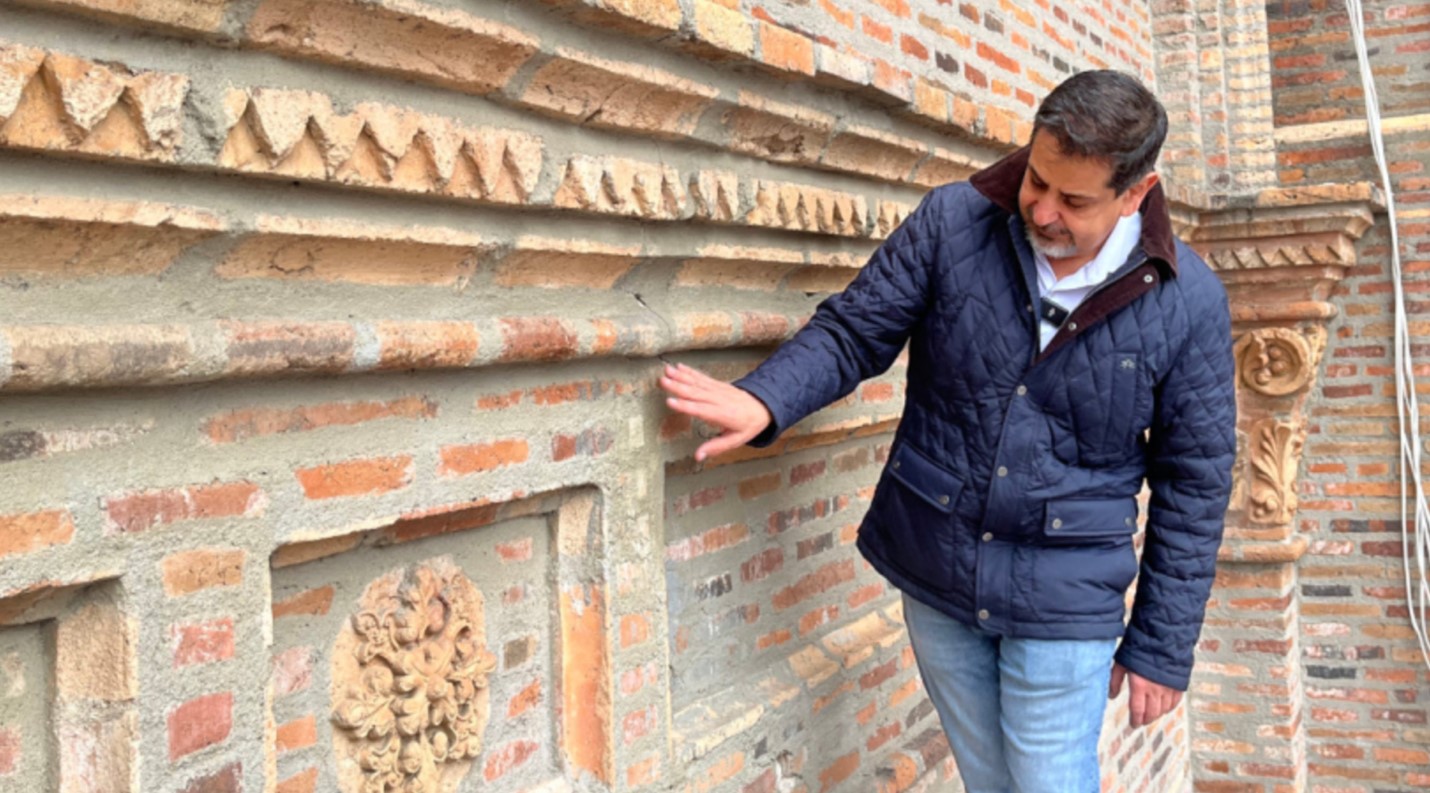
Juan Izquierdo, the architect leading the restoration of the Cathedral, shows the cracks on the exterior.
The first step in the process was identifying the extent of the damage. Thermal imaging and ground-penetrating radar systems were used to detect microcracks that were not visible to the naked eye. The most significant visible crack spans five meters across the façade and reaches a depth of 10 centimeters. Moisture has affected not only the external brickwork but also the interior paintwork, creating an environment conducive to fungus and moss growth, accelerating the degradation process.
A budget of $450,000 has been allocated for the restoration, with $160,000 spent by July 10, 2025. The work has involved an intricate mixture of traditional and modern techniques. For example, the lime used to restore the bricks was sourced from Mexico after local supplies in Cuenca were no longer available. The lime was combined with ash from brick kilns in Susudel, a rural parish in the Azuay canton, to create a grout that could be used to seal the brickwork. This innovative solution helped create a waterproof layer to protect the structure from further damage.

A worker cleans the lime on one of the vaults of Cuenca Cathedral, on July 10, 2025.
Preserving the cathedral’s future
The biggest hurdle in the restoration is the cathedral’s immense scale. Workers are faced with the challenge of scaling scaffolding to reach the central dome, which is over 55 meters high. The humidity continues to cause structural concerns, making the restoration process slow and labor-intensive. The architect overseeing the project, Juan Izquierdo, stressed the importance of precision in the work. Each step of the project is being meticulously documented for future generations, ensuring that the cathedral’s restoration is understood and preserved for years to come.

Damage to the paintwork caused by moisture in the central part of the dome of the Cathedral of the Immaculate Conception in Cuenca.
The current phase of restoration is expected to take two more years to complete, and once finished, the interventions will guarantee that no major consolidation work will be necessary for the next 25 years. Without such restoration, experts warn, further damage to the cathedral could become irreversible.
Izquierdo reflects on the deeper meaning of the project, stating, “This is a monument to all Cuenca residents, to faith, hope, and the brotherhood of Cuenca residents. Each of us is like a brick that builds a social temple.”
In a city that has witnessed tremendous growth, Cuenca’s cathedral continues to stand as a historical and spiritual cornerstone. As the restoration efforts continue, the iconic structure will not only remain a symbol of faith and culture but also a testament to the resilience and unity of the people who are dedicated to preserving it for future generations.

Thank you – well written and informative.