
Analysts say the president’s broad appeal, strategic campaigning, and RC’s missteps helped seal the outcome.
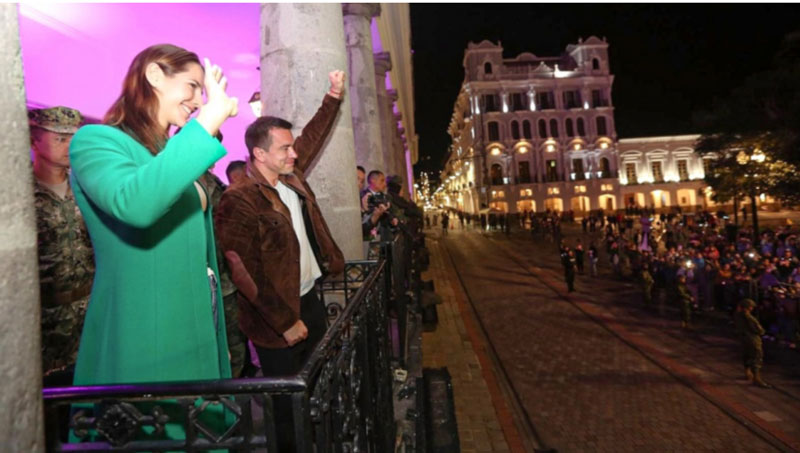
Daniel Noboa’s decisive second-round victory in Ecuador’s presidential election marked more than just a win at the polls. With 55.65% of the valid votes against Luisa González’s 44.35%, the outcome reflects a wider shift in public sentiment — a push away from the legacy of Rafael Correa and the political machinery behind the Citizen Revolution (RC).
With more than 97% of ballots counted, the numbers are clear, but political observers say the story behind them reveals a complex web of factors: strategic campaigning, expanded social outreach, an energized elderly vote — and a growing disillusionment with Correísmo’s track record.
A Permanent Campaign
Political analyst Juan Redrobán from the International University of Ecuador believes that Noboa’s advantage came from running what he calls a “permanent campaign.” Even while serving as president, Noboa remained visibly active in the provinces, presenting himself as both a leader and a candidate. This dual image allowed him to connect with citizens on the ground while leveraging the benefits of incumbency.
Redrobán also points to Noboa’s international optics — his alignment with U.S. President Donald Trump and his highly publicized visit to the U.S. — as symbolic moves that appealed to more conservative sectors. Add to this the strong support from the Armed Forces and National Police, and Noboa successfully positioned himself as the candidate of law, order, and modernization.
From Corruption to Credibility
The shadow of corruption scandals within the Citizen Revolution bloc — including the Ligados, Liga Azul, and Triple A cases — cast a long pall over González’s campaign. Redrobán says these stories, amplified by media and social platforms, painted RC as an emblem of the past, while Noboa represented change.
Former Minister of Government Francisco Jiménez agrees. He breaks down Noboa’s success into five factors. Chief among them: the deepening of anti-Correísmo sentiment among Ecuadorians. Years of corruption allegations and stagnation under RC-affiliated administrations have left voters wary.
Jiménez highlights one group in particular: older voters. The elderly were mobilized in unprecedented numbers, many lured by Noboa’s promises of increased aid. Their turnout proved decisive. In contrast, González’s coalition faltered — and in some Sierra regions, she even lost ground.
Unforced Errors
Analysts say the RC campaign was plagued by avoidable mistakes. González’s failure to clearly distance herself from controversial foreign leaders like Nicolás Maduro only fueled fears about a leftist agenda. Talks of ending dollarization — even when walked back — were damaging. And in a year marked by economic anxiety, such messaging cost votes.
Perhaps most critically, González struggled to establish her own identity. Santiago Becdach, a lawyer and political analyst, says her campaign lacked authenticity and failed to go beyond being “the Correa candidate.” In contrast, Noboa came across as pragmatic, modern, and refreshingly untethered from ideological baggage.
“Voters wanted renewal, firmness, and real transformation,” Becdach says. “Noboa offered a new horizon — and a proposal for a Constituent Assembly that signaled a break with the status quo.”
Mandate for Change
Becdach believes the election result — a double-digit margin — is more than an electoral win. It’s a clear mandate from citizens demanding reform. Noboa’s focus on structural change, rather than recycled ideology, resonated with a country fatigued by political infighting and institutional decay.
The RC’s credibility was further eroded by poor governance in regions it controlled. Analysts cite failed development projects, budget mismanagement, and improvisation in local governments as factors that hurt González’s national image.
Political commentator Bernardo Gortaire adds that González never managed to expand her support beyond the core Correísta vote. Her second-round messaging veered away from progressive principles and toward conservative rhetoric with nationalist and even xenophobic tones — a pivot that alienated some of her original base while failing to attract new voters.
Gortaire also believes that late-arriving alliances with other political actors did little to help, noting that “votes are not easily transferred.” The RC also underestimated the lingering fears surrounding proposals like de-dollarization and the creation of a controversial “peacemakers” corps.
An Uneven Playing Field?
Despite the outcome, some critics argue that Noboa’s campaign blurred the lines between governance and electioneering. Questions have been raised about the legality of his campaigning while still holding office. Others point to the rollout of a $560 million social aid package just before the election — divided into seven separate programs — as a possible breach of electoral fairness.
Even so, the consensus among political observers is that Noboa’s appeal was broad and well-calculated. His firm stance on security, his media strategy, and the support he received from figures like journalist Carlos Vera helped him galvanize a segment of the population — especially those over 65 — who viewed him as a necessary counter to Correa’s lingering influence.
The result now places Noboa in a position of both great opportunity and high expectations. With a clear mandate but a divided political landscape, how he moves forward may define Ecuador’s direction for years to come.

He showed an understanding of how the US works as well.