
Government forms new committee to combat the recruitment of children by criminal organizations in conflict zones.
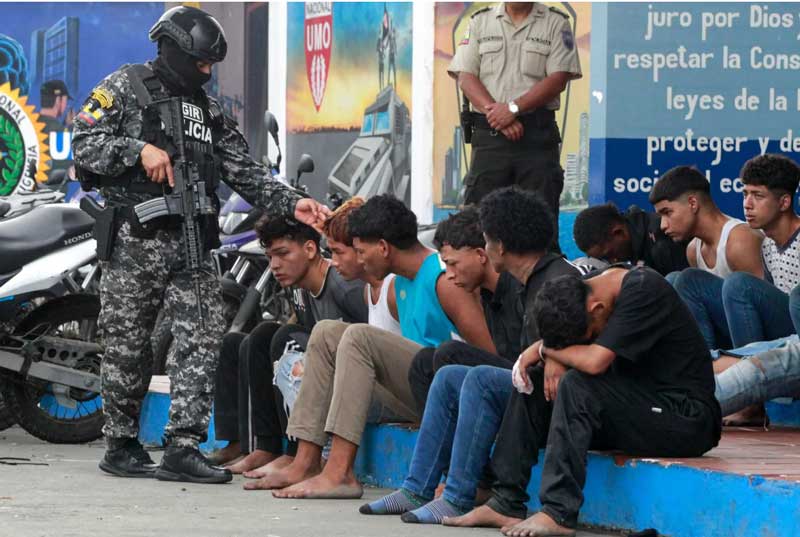
Ecuador’s battle against organized crime is taking a darker turn, as criminal gangs increasingly recruit minors to fuel their illicit activities. The latest statistics show that between 1,200 and 1,300 minors were arrested in the first half of 2025, a troubling sign of the growing involvement of youth in criminal enterprises. While this is a slight decrease from last year’s figures, which saw over 3,000 minors detained, the issue remains critical, with an alarming 5% of all people involved in gangs being children.
Minister of Economic and Social Inclusion Harold Burbano highlighted the troubling trend during a press conference, noting that Orellana has become the new epicenter for the recruitment of minors into gangs. The province’s crisis is worsened by the rise of illegal gold mining in the Amazon, which is linked to organized crime and the presence of dissidents from Colombia’s FARC guerrilla group, notably the Border Commandos.
“The situation is quite critical, and we are making it a national priority to intervene,” Burbano stated, stressing that the government is taking significant steps to combat the growing presence of criminal groups in the Amazon and coastal provinces.
Unprecedented Youth Involvement in Crime
The arrest of “Celsito,” a teenager accused of leading a gang in Esmeraldas, on June 10th, underscores the expanding role of minors in organized crime. The timing of the arrest coincides with a proposal made by an assembly member to start prosecuting juvenile offenders as adults, a move that reflects the severity of the nation’s security crisis.
However, while government officials express concern over the increasing numbers, Burbano explained that minors are often coerced into joining gangs as a result of the violence that dominates their communities. With over 55,000 people involved in criminal activities across the nation, children and adolescents are disproportionately impacted.
Areas of Highest Concern
Beyond Orellana, other regions like Guayas, Manabí, and Esmeraldas are similarly struggling with youth recruitment by gangs. Burbano emphasized that Ecuador’s Amazon region is one of the “hot zones” where recruitment is most intense. To address this growing concern, the government is collaborating with the Ministry of the Interior to develop a georeferencing map to identify the most vulnerable areas and better coordinate efforts to protect children.
Burbano also highlighted that nearly 20,000 families live in areas with the highest levels of violence, which directly contributes to the recruitment of their children. “These families are living in conflict zones, and it’s easier for criminal organizations to target their children,” Burbano explained.
Government’s Strategic Response
In light of these developments, President Daniel Noboa has authorized the creation of a new committee to tackle the issue of child recruitment by criminal gangs. The National Committee Against Child Recruitment is composed of representatives from 17 national government institutions, including the Ministries of Education, Health, and Foreign Affairs. Additionally, the National Service for Comprehensive Care for Persons Deprived of Liberty (SNAI) and the National Council for Intergenerational Equality will play key roles in the committee’s efforts.
This new initiative aims to address not only the immediate threat posed by organized crime but also the long-term consequences of a generation of children being drawn into criminal activity. As the government steps up its intervention, the hope is to reduce the number of minors becoming embroiled in Ecuador’s increasingly violent crime landscape.
The presence of criminal gangs continues to destabilize the nation, contributing to Ecuador’s soaring homicide rate, which is the highest in Latin America. With one murder occurring every hour in 2025, the urgency for a comprehensive solution to this crisis has never been greater.

Trying to blame the children for this problem is very typical of the authoritarian style regimes. The pretend “leaders” do everything in their power to ensure children have no advantages in their lives at all, resulting in these same children being more easily recruited. I also thought the article in Cuenca Highlife right after this article was a very interesting choice:
“New cases of police and military corruption highlight an ongoing problem in Ecuador”
“Recent cases have once again highlighted the criminal infiltration of Ecuador’s police and military personnel, adding to what is a long history of close ties between criminal groups, the drug business, and the country’s security forces.”
But yes, it is the fault of the children.