
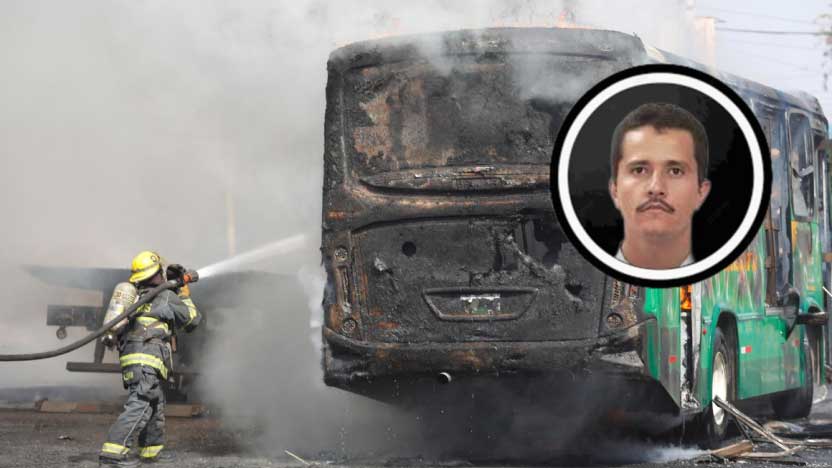
The death of a Mexican cartel leader raises questions about alliances, routes, and whether violence will shift or harden.
The killing of Nemesio Oseguera Cervantes, known as alias “El Mencho,” during a Mexican federal operation on February 22nd has removed the central figure of the Jalisco New Generation Cartel and jolted criminal networks well beyond Mexico’s borders. In Ecuador, where the cartel has built influence through local alliances rather than a visible foreign footprint, security officials are watching closely for signs of change—or escalation.
For years, the Jalisco New Generation Cartel has treated Ecuador less as a base than as a strategic corridor. Its model relies on partnerships with domestic gangs that control territory, ports, and routes, allowing the Mexican cartel to finance, coordinate, and move cocaine shipments without deploying large numbers of its own operatives. That structure has tied Ecuador’s internal violence to conflicts that originate hundreds of miles away.
A partnership model rooted in local gangs
Investigators identify Los Lobos as the cartel’s principal ally in Ecuador, with secondary links to groups such as Los Tiguerones and Chone Killers. These organizations originally aligned under a so-called “New Generation” banner to challenge the dominance of Los Choneros, a rival network historically associated with Mexico’s Sinaloa Cartel.
That rivalry has played out on Ecuadorian streets and in its prisons. As the feud between the Jalisco New Generation Cartel and Sinaloa intensified, Ecuador became one of its spillover theaters, contributing to spikes in violence as local gangs fought for control of ports, highways, and storage points critical to the Pacific drug corridor.
Rather than running operations directly, the Mexican cartel has functioned as a logistical and financial backer, supplying resources, contacts, and access to international markets. The arrangement has allowed Ecuadorian groups to expand quickly while keeping the cartel’s own presence largely invisible.
Ports, routes, and diversification
Ecuador’s coastline has been central to this strategy. Authorities say the cartel and its allies have focused on provinces such as Manabí, El Oro, Santa Elena, and Los Ríos, using ports and secondary maritime routes to move cocaine northward from the Colombian border toward Central America, Mexico, and the United States.
Key figures helped cement those routes. One was Leandro Norero, alias “El Patrón,” who controlled cocaine flows from the port of Posorja and became one of the most prominent Ecuadorian traffickers linked to the cartel. Another was Simón Marmolejo Zambrano, known as “El Tunco,” arrested on October 24th, 2025, in Portoviejo, and described by investigators as another critical connector between Ecuadorian gangs and their Mexican partners.
In recent years, those alliances have also broadened their criminal portfolio. Security services report that groups tied to the cartel have moved into illegal gold mining, particularly in Azuay and parts of the Amazon, using mining to launder profits and reduce dependence on drug trafficking alone.
Terrorist designations and mounting pressure
Ecuador’s government has classified several of these gangs as terrorist organizations under its declaration of an “internal armed conflict,” framing them not only as criminal enterprises but as armed actors threatening the state. That designation has been mirrored abroad. In September 2025, the United States designated Ecuadorian gangs affiliated with the Jalisco New Generation Cartel as terrorist organizations, a move intended to choke off financing and expand the legal tools available to pursue their networks.
Those measures increased pressure on the cartel’s regional structure even before El Mencho’s death. His removal now raises a fundamental question: whether the cartel’s Ecuadorian partners will splinter, realign, or double down on existing arrangements as leadership struggles unfold in Mexico.
Shockwaves from a violent operation
The operation that killed El Mencho was carried out in Tapalpa, in the western Mexican state of Jalisco, with Mexican authorities later confirming that U.S. intelligence support contributed to its planning. The clash left multiple alleged cartel members dead or wounded, with weapons and armored vehicles seized, including heavy arms capable of downing aircraft.
The aftermath was immediate and violent. In several Mexican states, groups linked to organized crime blocked roads with burning vehicles and set businesses ablaze, while authorities suspended public transportation in some areas and activated emergency security protocols. Even Guadalajara’s international airport saw disruptions as alleged retaliatory attacks briefly erupted nearby.
While those scenes unfolded in Mexico, their implications are being felt in Ecuador, where security officials are bracing for potential aftershocks. A power vacuum at the top of one of the world’s most aggressive cartels could trigger internal disputes, shifts in alliances, or attempts by rivals to seize territory—developments that could once again play out along Ecuador’s ports and inland routes.
Whether El Mencho’s death weakens the cartel’s grip or hardens its resolve abroad remains uncertain. What is clear is that Ecuador’s criminal landscape, already shaped by transnational rivalries, is entering another volatile chapter, with local gangs and international partners recalculating their next moves.
0 Comments