
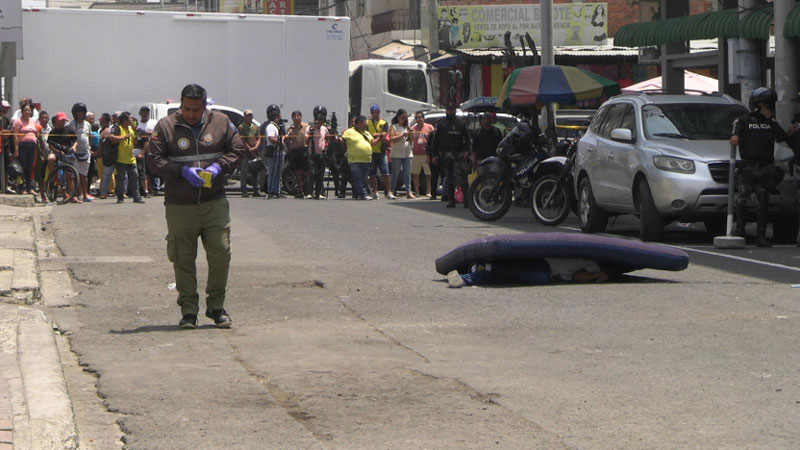
Ecuador’s initial decline in violent crime reversed in 2025, with record-breaking murders highlighting the country’s ongoing security crisis.
Ecuador ended 2024 with one of the highest violent death rates in South America, second only to Trinidad and Tobago. While the country saw a decline in homicides compared to 2023, the progress proved short-lived. The first month of 2025 has shattered previous records, with a murder occurring nearly every hour, underscoring the persistent instability gripping the nation.
A Year of Contrasts: Decline in 2024, Surge in 2025
Official data from Ecuador’s National Police reported 6,964 violent deaths in 2024, translating to a homicide rate of 38.76 per 100,000 inhabitants. This marked a 16.5% decrease from the previous year, when Ecuador experienced its deadliest year in modern history. The decline initially followed President Daniel Noboa’s declaration of an internal armed conflict against organized crime, resulting in a military crackdown on drug cartels. However, despite early success, violent deaths began rising again by March 2024, culminating in a deadly August that saw more homicides than the same month in 2023.
The temporary drop in crime gave way to a dramatic escalation as 2025 began. Between January 1st and January 26th, authorities recorded 658 murders—a 56% increase compared to the same period in 2024. This means that, on average, one person was killed every hour. The alarming surge has set a new precedent, making January 2025 the most violent start to a year in Ecuador’s recorded history.
Among the high-profile victims was Ronald Gancino, an officer of Ecuador’s Transit Commission, who was assassinated on a beach in Salinas. Authorities are investigating possible connections between his killing and criminal groups operating in the port of Santa Rosa. Other notable victims include former Arenillas mayor Eber Ponce, as well as businesspeople and suspected gang affiliates.
Regional Crime Trends: Ecuador’s Place in Latin America’s Violence Epidemic
Ecuador’s rising crime rate places it among the most dangerous nations in Latin America. While Trinidad and Tobago led South America with a homicide rate of 45.3 per 100,000 inhabitants in 2024, Ecuador followed closely behind. The situation in both countries is largely attributed to gang warfare and struggles over control of drug trafficking routes. Neighboring Colombia, also plagued by cartel-related violence, reported a homicide rate of 25.5 per 100,000 last year.
By contrast, Argentina recorded the lowest murder rate in the region, at 3.8 per 100,000 inhabitants. Officials there credit the decrease to coordinated efforts between federal and local security forces, highlighting a stark disparity in crime-fighting effectiveness across South America.
In a broader Latin American context, Ecuador ranked as the seventh most violent country in 2024, dropping from fifth place the previous year. However, despite this relative improvement, the country’s homicide rate remains significantly higher than that of historically violent nations like Mexico, which registered 23.2 homicides per 100,000 people.
The Geography of Violence: Ecuador’s Deadliest Zones
While crime has increased nationwide, certain regions have been hit hardest. Six of Ecuador’s ten administrative zones reported significant surges in homicides in early 2025.
The most dramatic spike occurred in Zone 3—covering Cotopaxi, Tungurahua, Chimborazo, and Pastaza—where murders rose by 367% compared to the same period in 2024. Zone 7, which includes El Oro, Loja, and Zamora Chinchipe, saw a similarly alarming increase of 361%. Other high-risk areas include Zone 4 (Manabí and Santo Domingo), where homicides climbed 163%, and Zone 8 (Guayaquil, Durán, and Samborondón), which remains the country’s most dangerous urban cluster, with a 36% increase in killings.
The Guayas region, particularly its capital Guayaquil, continues to serve as a hotspot for cartel-related violence. While security forces have attempted to suppress organized crime, gangs have adapted, shifting their operations and escalating their use of targeted assassinations, extortion, and kidnappings.
A Nation at a Crossroads
Ecuador’s crime crisis poses a significant challenge to President Noboa’s administration. Despite aggressive military intervention, criminal organizations remain deeply entrenched, with violence surging in early 2025. The government’s next steps will determine whether Ecuador can regain control or if the nation’s descent into lawlessness will continue.
As authorities scramble to respond, Ecuadorians face an uncertain future. The promise of reduced violence in 2024 has been replaced by a grim reality: crime remains rampant, and the streets are as dangerous as ever.

Trinidad and Tobago is not in South America, so the reference in this story should be updated.
Thank you Marc, that should have said, Latin America.