
Government cites intelligence analysis while border communities warn of economic and humanitarian fallout.
A sudden narrowing of the borders
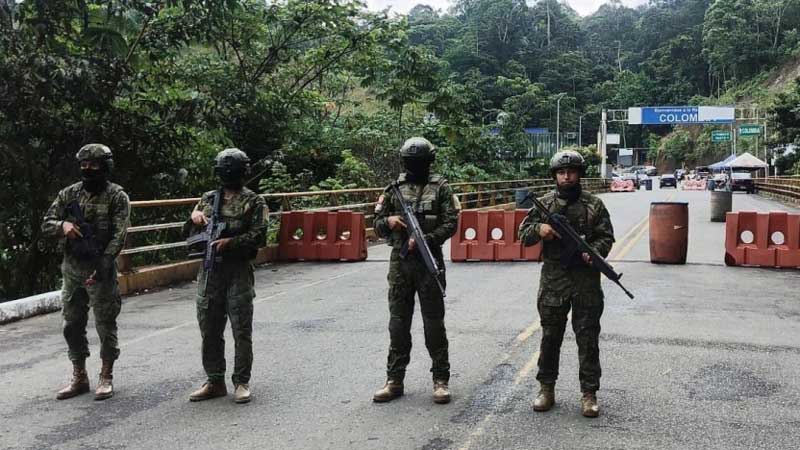
Since December 24th, Ecuador has funneled all legal land transit with Colombia and Peru through just two points: the Rumichaca crossing in the north and Huaquillas in the south. The decision effectively shutters all other international land crossings, a move the government says is grounded in national security concerns linked to organized crime operating along the borders.
Authorities insist the measure is temporary but firm, designed to concentrate state control at the most secure and monitored locations while security forces intensify operations in vulnerable border provinces.
Military deployment and intelligence-based controls
Alongside the restrictions, the Armed Forces have expanded surveillance and control operations in Carchi, Esmeraldas, and Imbabura, provinces that sit along key trafficking corridors. According to the government, the closures respond to technical and intelligence assessments aimed at disrupting criminal economies that exploit porous border routes.
Officials argue that limiting crossings helps block illicit activities including human trafficking, smuggling, illegal mining, extortion, and contract killings. By channeling traffic through Rumichaca and Huaquillas, authorities say they can better protect civilians, monitor movements, and strengthen lawful trade rather than allowing it to be undermined by criminal networks.
Why Rumichaca and Huaquillas
The two remaining crossings are not symbolic choices. Rumichaca, on the border with Colombia, operates through a National Border Assistance Center that centralizes Ecuadorian migration, customs, and security services. Huaquillas, linking Ecuador and Peru, functions through a binational complex designed to manage high volumes of trade and passenger traffic.
Government officials say concentrating resources at these hubs allows for more effective inspections, faster coordination among agencies, and tighter control over who and what enters the country. Other crossings, they argue, lack the infrastructure or staffing to provide the same level of oversight during a period of heightened security risk.
Border economies caught off guard
The announcement, first made by the Foreign Ministry and later reiterated by the Interior Ministry, caught many border communities by surprise. Tourism operators, transport unions, and trade associations in provinces such as Loja and Carchi said they learned of the decision through social media, just days before major holiday travel.
Local business leaders warn the impact could be immediate. Border towns depend heavily on the constant flow of goods, services, and visitors from neighboring countries. Reduced access, they say, risks cutting off livelihoods during one of the busiest economic periods of the year.
Meetings with local authorities
Facing mounting criticism, government representatives held a working meeting with mayors and productive sector leaders from Loja province. Officials said the discussions focused on coordinating measures to mitigate economic impacts without weakening border controls.
Authorities emphasized that the state remains open to dialogue with local governments but stressed that security considerations will take precedence. Any adjustments, they said, must align with the broader strategy to reclaim territorial control from organized crime groups.
Fear of unintended consequences
Beyond economic concerns, residents on both sides of the borders have voiced fears that the closures may push people toward clandestine crossings. Communities in southern Ecuador and neighboring areas of Peru, as well as towns near the Colombian border, have warned that shutting official routes can increase humanitarian and security risks.
Informal crossings, often controlled by criminal groups, expose migrants and traders to extortion, violence, and exploitation. Critics argue that without complementary measures—such as humanitarian corridors or expanded monitoring of informal routes—the policy could inadvertently strengthen the very networks it seeks to dismantle.
A broader security backdrop
The border restrictions unfold against a backdrop of sustained violence that has reshaped Ecuador’s security landscape. Since 2024, the country has been under a declared state of internal armed conflict, a designation used by the government to frame its fight against organized crime groups it labels as terrorists.
Ecuador has recorded the highest homicide rate in Latin America in recent years, a grim statistic that authorities cite to justify extraordinary measures across the country, from prisons to ports and now land borders.
Regional coordination and next steps
The Foreign Ministry has said the decision was formally communicated to the governments of Colombia and Peru, underscoring that the measure is unilateral but not secretive. Officials have not specified how long the restrictions will remain in place, leaving border communities uncertain about the coming weeks.
For now, Rumichaca and Huaquillas stand as Ecuador’s only legal land gateways, heavily guarded symbols of a state prioritizing security amid crisis. Whether the strategy succeeds in weakening organized crime—or deepens economic and humanitarian strains along the borders—will likely determine how long the gates remain closed elsewhere.

0 Comments