
Foreign ministries clash publicly even as both governments outline security, energy, and trade steps to defuse escalating dispute.
Ecuador’s government has formally rejected Colombia’s decision to maintain a 30% tariff on Ecuadorian products, arguing that Bogotá is misplacing blame for a dispute that, according to Quito, stems from Colombia’s failure to control its own southern border. The response came after Colombia’s Foreign Ministry reiterated the tariff measure, even as both countries’ top officials had quietly met days earlier in an effort to cool tensions.
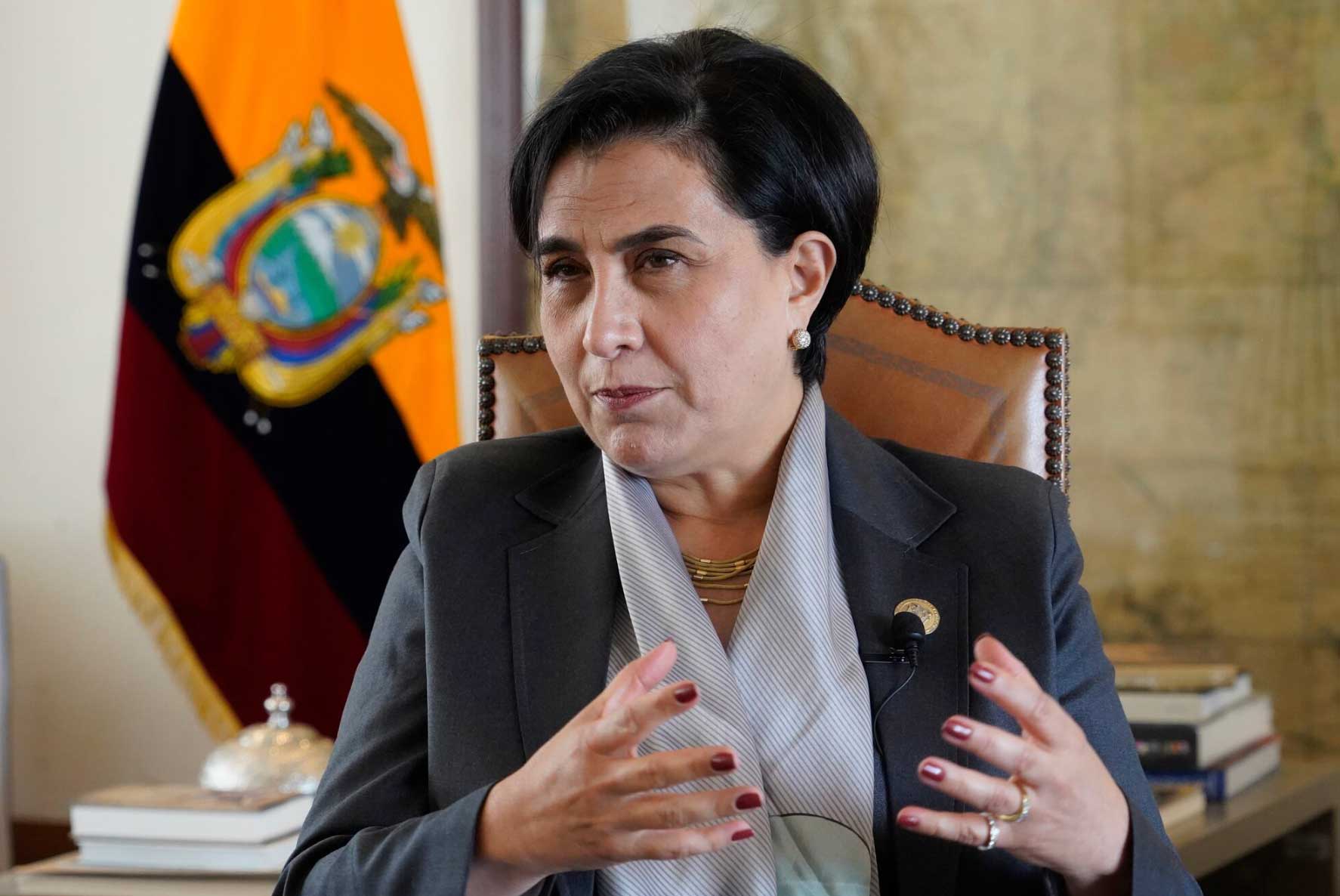
In a sharply worded statement, Ecuador’s Minister of Foreign Affairs and Human Mobility, Gabriela Sommerfeld, said it was “striking” that Colombia would attempt to attribute responsibility to Ecuador when the root causes of the conflict lie in “the lack of effective control and state presence” on the Colombian side of the border. The ministry’s response coincided with the publication of details from a private bilateral meeting held in Quito on February 6th, where both sides discussed security, energy, and trade measures aimed at reversing what has become a full-fledged trade and diplomatic standoff.
The February meeting was held behind closed doors, with no statements to the press afterward. Ecuador’s Foreign Minister Gabriela Sommerfeld and her Colombian counterpart, Rosa Villavicencio, left the talks without public remarks, underscoring the sensitivity of the negotiations. Villavicencio traveled to Quito accompanied by a high-level delegation that included Colombia’s defense minister, senior officials from commerce, energy, justice, and tourism agencies, as well as representatives of the state oil company Ecopetrol.
Border security at the center of the dispute
According to Ecuador’s account of the talks, security and border control dominated the agenda. Quito said Colombia acknowledged that the proliferation of coca cultivation, illegal mining, and weak border oversight within its territory are central drivers of cross-border crime affecting Ecuador.
Colombia, the Ecuadorian Foreign Ministry reported, committed to stepping up efforts to eradicate coca crops, combat illegal mining, and strengthen control along the shared border. These actions would involve greater investment in technology, improved information sharing, and enhanced coordination between security agencies on both sides of the frontier. Ecuador framed these commitments as essential not only to bilateral relations but to any sustainable solution to the broader security crisis gripping its northern provinces.
Prisoner transfers and unresolved judicial cases
Another key issue addressed in Quito was the transfer of persons deprived of liberty. Ecuador said Colombia agreed to review, within three months, the cases of Colombian nationals currently serving sentences in Ecuadorian prisons. The review would cover 722 cases; a process Ecuador had formally requested nearly two years ago.
In addition, Colombia committed to cooperating in the land transfer of Venezuelan nationals incarcerated in Ecuador, facilitating their return through Colombian territory. Ecuadorian authorities have long argued that overcrowded prisons and the presence of foreign inmates exacerbate internal security challenges.
The talks also touched on a sensitive judicial matter involving an Ecuadorian citizen subject to an international red alert for organized crime. According to Quito, Colombia agreed to review the extradition process after the individual was released under international protection, a move that had raised concerns within Ecuador’s justice system.
Energy ties strained, then cautiously reopened
Energy cooperation, strained by the dispute, was another focal point. Ecuador said Colombia committed to lifting the suspension on electricity exports, a critical supply for Ecuador during periods of drought and energy shortages. Bogotá also agreed to resume bilateral financial contracts between private-sector actors in the energy market.
On oil transportation, Ecuador acknowledged its own role in the escalation, committing to review pipeline usage fees and analyze the possible reopening of the San Miguel River crossing. That step would allow tanker trucks to transit with safe-conduct passes, potentially restoring a key logistical route for Colombian crude.
These discussions followed Ecuador’s decision to raise the transportation fee charged to Ecopetrol from $3 to $30, a move that effectively halted the flow of roughly 10,000 barrels of Colombian oil per day through Ecuadorian pipelines. The fee hike was widely seen as a retaliatory measure after Colombia cut electricity supplies.
Trade measures and market access
Despite Colombia’s public insistence on maintaining the tariff, Ecuador said both countries agreed in principle to dismantle trade barriers once a comprehensive agreement is signed. According to Quito, the lifting of tariff measures would occur as soon as authorities formalize an accord addressing all outstanding issues on the bilateral agenda.
Colombia also committed to removing sanitary restrictions that have limited access for Ecuadorian products, while accepting the passage of Ecuadorian trucks through Colombian territory without requiring transshipment. Ecuador described this as a reciprocal arrangement consistent with the treatment Colombian transporters already receive inside Ecuador.
How the trade war began
The current confrontation began on January 21st, when Ecuadorian President Daniel Noboa announced a 30% “security tax” on Colombian imports. Noboa justified the measure by accusing Colombia of insufficient cooperation in combating drug trafficking and organized crime along the border. Colombia responded swiftly, imposing an identical tariff on more than 50 Ecuadorian products.
The escalation did not stop there. Colombia suspended electricity exports to Ecuador, a decision that carried immediate consequences for a country already struggling with recurring energy crises. Ecuador, in turn, raised oil transit fees for Colombian crude, striking at a revenue stream vital to Bogotá.
Historically, Ecuador and Colombia have been close trading partners, with bilateral trade in recent years hovering around $2.8 billion. That exchange, however, has consistently favored Colombia, leaving Ecuador with an annual trade deficit of roughly $900 million. The current standoff has placed that relationship under unprecedented strain.
Even as public statements grow sharper, Ecuador’s Foreign Ministry said both delegations reaffirmed their intention to continue working together on border security and the fight against transnational organized crime. Whether those private commitments can overcome the increasingly confrontational public rhetoric remains an open question, as tariffs and countermeasures continue to weigh on one of the region’s most important bilateral relationships.

0 Comments