
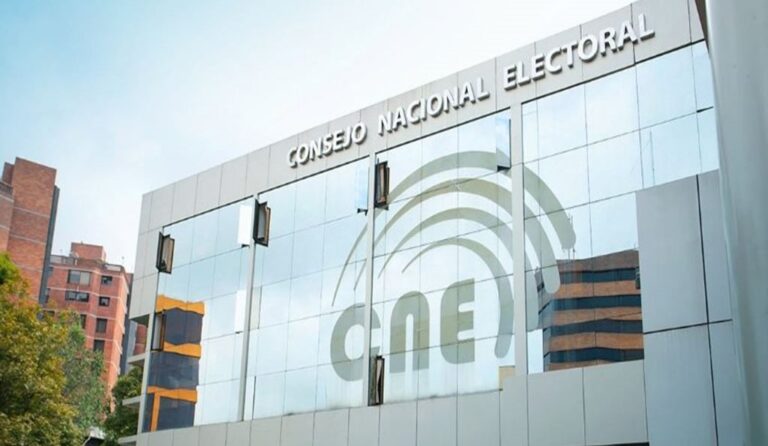
Ecuador’s election authorities consider banning ballot photos amid allegations of voter coercion, escalating political tensions before the runoff.
The National Electoral Council (CNE) is weighing a ban on photographing ballots in Ecuador’s presidential runoff on April 13th, following concerns that armed groups may have pressured voters to support a specific candidate in the first round. The move comes as both government officials and political candidates debate the extent of alleged electoral threats, raising questions about the integrity of the voting process.
Government Raises Alarm Over Voter Intimidation
Government Minister José De La Gasca reiterated on February 14th that intelligence sources indicated possible voter coercion in certain precincts, a concern first voiced by President and re-election candidate Daniel Noboa. According to De La Gasca, reports suggest that in some provinces, citizens were forced to cast their votes for a specific candidate under threat of violence. He warned that voters’ lives were at risk in what he described as a “money-and-lead game.”
Noboa, representing the National Democratic Action (ADN) party, initially made these claims in a radio interview on February 12th. He asserted that armed groups exerted pressure on voters to choose a particular candidate but did not provide specific evidence or details. His allegations have since sparked intense political debate and calls for electoral reforms.
CNE Investigates and Considers Security Measures
In response, the CNE announced that it would meet with the Armed Forces and National Police to assess the validity of these threats and determine if additional security measures are necessary for the runoff election. Electoral counselor José Cabrera stated that while no formal complaints had been filed regarding voter intimidation, the council is taking the allegations seriously.
“If proven true, one of the proposals is to prohibit taking photos of voting ballots,” Cabrera explained. He emphasized that such a measure would aim to prevent coercion by making it impossible for voters to provide photographic proof of their choice to third parties. However, he stressed that any decision would be made in coordination with intelligence agencies and security forces.
The CNE’s deliberations come amid a broader effort to ensure electoral transparency and prevent external influences from undermining the democratic process. The council is also considering deploying additional security personnel to polling stations in high-risk areas and implementing stricter controls on electronic devices within voting booths.
Political Fallout: Noboa vs. González
Noboa’s allegations have heightened tensions between him and his rival, Luisa González of the Citizen Revolution (RC) party. Without directly naming her, Noboa implied that criminal organizations backed her candidacy, fueling suspicions about the legitimacy of her support base.
González swiftly denounced these accusations, calling them baseless and an insult to her voters. “The voters of @RC5oficial are neither drug traffickers nor criminals,” she posted on social media. She further alleged that the sister-in-law of Adolfo “Fito” Macías, the fugitive leader of the Los Choneros gang, was running for a seat in the National Assembly under Noboa’s ADN party.
“I DEMAND that you respect the Ecuadorians, the homeland that you do not feel in your soul because you do not even know our National Anthem,” she added, directly attacking Noboa’s patriotism.
Despite the heated exchange, Noboa has not formally responded to González’s counterclaims.
Scrutiny of Election Results and OAS Involvement
As political tensions escalate, the CNE convened the National Public Hearing of Scrutiny on February 14th to review vote tallies from the first round of elections. The council reported that results had been fully processed in 21 provinces, with the remaining votes expected to be verified in the coming days.
With 96.6% of the ballots counted, Noboa currently holds 44.16% of the vote, while González closely trails with 43.94%. The razor-thin margin has fueled further scrutiny of the electoral process and intensified accusations from both sides.
Noboa has questioned the accuracy of the official vote count, claiming that discrepancies exist between the CNE’s tally and the quick count conducted by the Organization of American States (OAS). “We kept counting, we kept checking in certain provinces because there were things that didn’t add up,” he said in a February 12th interview.
However, the OAS, which deployed an 80-member observation team for Ecuador’s elections, refuted claims of irregularities. In an official statement, the organization confirmed that its quick count results aligned with the figures released by the CNE, effectively dismissing Noboa’s concerns.
Despite the OAS’s assurances, suspicions persist among Noboa’s supporters, who argue that additional oversight may be necessary for the second round.
Implications for the Runoff Election
With the April 13th runoff approaching, the CNE’s decision on ballot photography could significantly impact election security. If implemented, the measure would mark a shift in voting regulations, potentially altering how voters document and verify their choices.
Beyond the technical aspects, the controversy highlights the deepening political divide in Ecuador, where allegations of corruption, organized crime, and electoral fraud have become central campaign issues. As both candidates prepare for their final showdown, ensuring voter confidence and preventing external influence will be paramount in determining Ecuador’s next leader.
The CNE is expected to finalize security measures in the coming weeks, as political parties brace for what promises to be a contentious and closely watched second round of voting.

0 Comments