
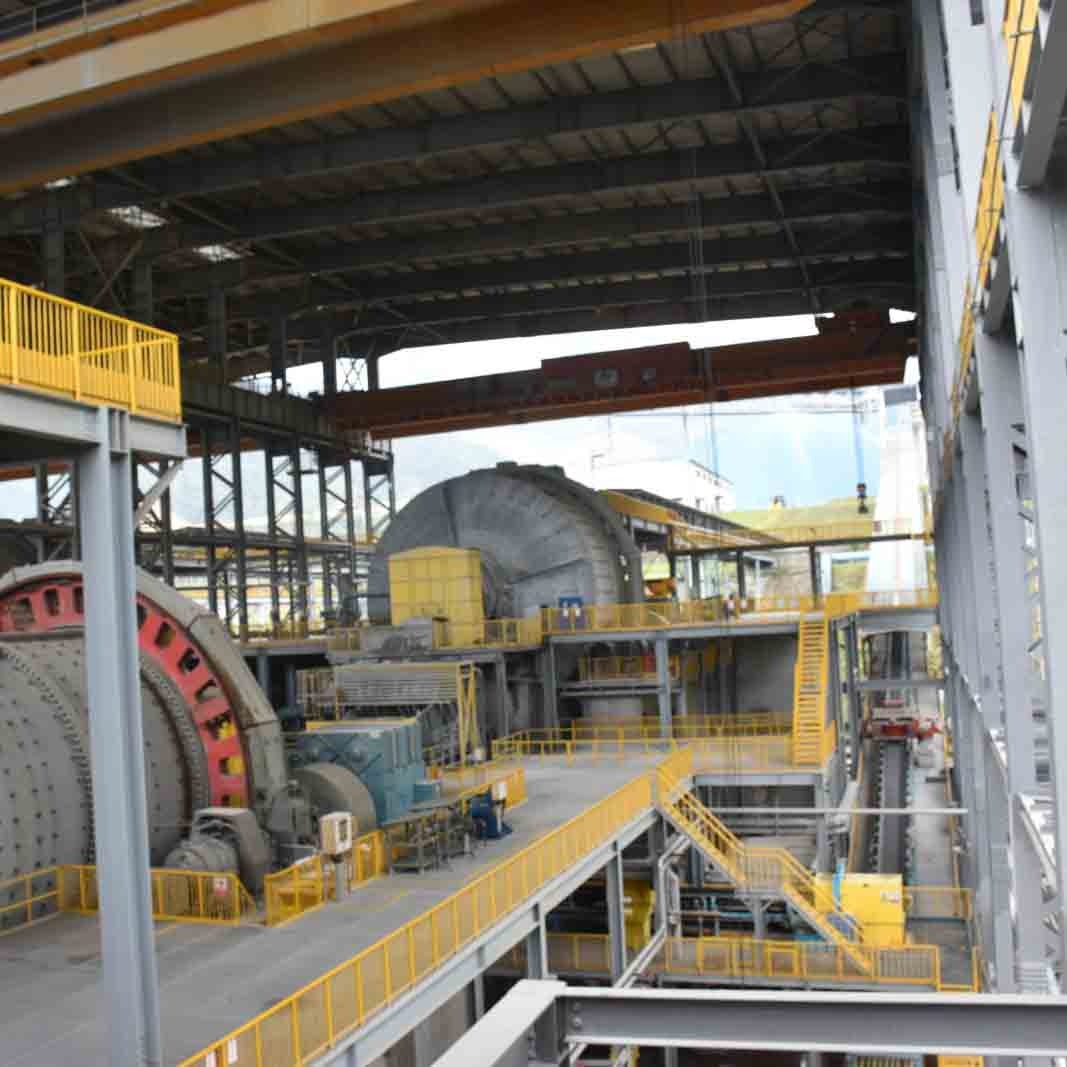
Four major industrial consumers cut grid demand during drought-driven strain on the national power system.
Ecuador’s government has sharply reduced electricity deliveries to the country’s four largest industrial power users, shifting them onto self-generation systems for part of each day as officials try to preserve electricity for the broader public during a worsening drought.
The measure affects the group of major consumers classified as AV2, a category reserved for companies that require exceptionally large volumes of electricity delivered through high-voltage transmission lines of 138 to 230 kilovolts. Together, those four companies account for about 230 megawatts of demand, or roughly 5.4% of Ecuador’s average national electricity consumption.
According to the Ministry of Environment and Energy, the cutback has been carried out in coordination with the companies rather than imposed as a unilateral order. The ministry said the arrangement was designed to ease pressure on the national grid at a time when reduced generation has made it increasingly difficult to serve both industrial demand and residential consumption, particularly in urban areas.
Who is affected
The four companies in the AV2 group are Ecuacorriente, which operates the Mirador copper project; Aurelian Ecuador, which is in charge of the Fruta del Norte gold project; and the steel manufacturers Novacero and Adelca.
Each of them has been relying on its own generation systems for between four and six hours a day, effectively stepping away from the national grid during part of the daily demand cycle. The reduction in state-supplied electricity has now been in place for about two weeks.
The steel sector makes up the largest share of the curtailed industrial demand. Novacero and Adelca together consume around 130 megawatts, more than half of the total power required by the four-company AV2 group. The two mining operations, by contrast, use a combined 100 megawatts, still a significant amount and roughly equivalent to the output of the Delsitanisagua hydroelectric plant.
Mining operations already had backup capacity
Among the mining projects, Mirador is by far the heavier consumer. Its total demand reaches 83 megawatts, though about 40 megawatts are already covered through self-generation. Fruta del Norte, on the other hand, operates with a normal and permanent demand of about 20 megawatts, making it the lightest electricity user in the AV2 category.
During peak demand hours, Fruta del Norte produces nearly half of the power it needs on its own, cutting its grid consumption to around 10 megawatts. That existing backup capacity has made it somewhat better positioned than other major consumers to adapt to the current restrictions.
The government’s decision to draw more heavily on industrial self-generation reflects growing stress across Ecuador’s electricity system, where hydroelectric output remains highly vulnerable to changing river flows and prolonged dry conditions.
Pressure from Coca Codo Sinclair
The timing of the supply reduction coincides with a steep decline in water flows in the area of Coca Codo Sinclair, the country’s largest hydroelectric plant and a pillar of the national generation system. As river levels weakened, the amount of electricity available from the plant also came under pressure, adding to concerns about the stability of supply.
That situation worsened further as thermoelectric generation also suffered setbacks. On March 17, 2026, the National Electricity Operator, Cenace, sent an official communication asking companies with their own generation equipment to activate engines and turbines to meet their own energy needs.
The request cited a sustained fall in water inflows as well as multiple unplanned contingencies in the country’s generation fleet. In practice, the message signaled that Ecuador’s grid operator was looking for every available source of support to prevent a broader deterioration in service.
Cenace called for the contribution of Emergency Generator Groups, referring to private companies capable of producing their own electricity, and said those systems should begin operating from March 17th until the operator determined otherwise.
Government frames measure as voluntary coordination
The ministry later responded by emphasizing that the use of private self-generation was not presented as a mandatory order but as an optional and coordinated measure agreed to with the companies involved. Even so, the result has been a notable reduction in electricity supplied by the state to some of the country’s most energy-intensive industrial players.
The move also underscores the degree to which large industrial consumers have become part of Ecuador’s emergency energy strategy. Rather than focusing only on state generation and public rationing, authorities are now leaning on private backup capacity to keep the broader system functioning during periods of lower hydroelectric output.
That role is expected to become even more formal in the months ahead. By December 2026, the country’s biggest electricity consumers are expected to have their own self-generation plants installed, a requirement that points to a longer-term policy shift in which major industries will be expected to shoulder more responsibility for securing part of their own energy supply when the national system comes under strain.
0 Comments