
Intercepted chats, raids and a leadership shakeup expose how routine vehicle procedures became a cash-driven operation.
Raids that halted a national service
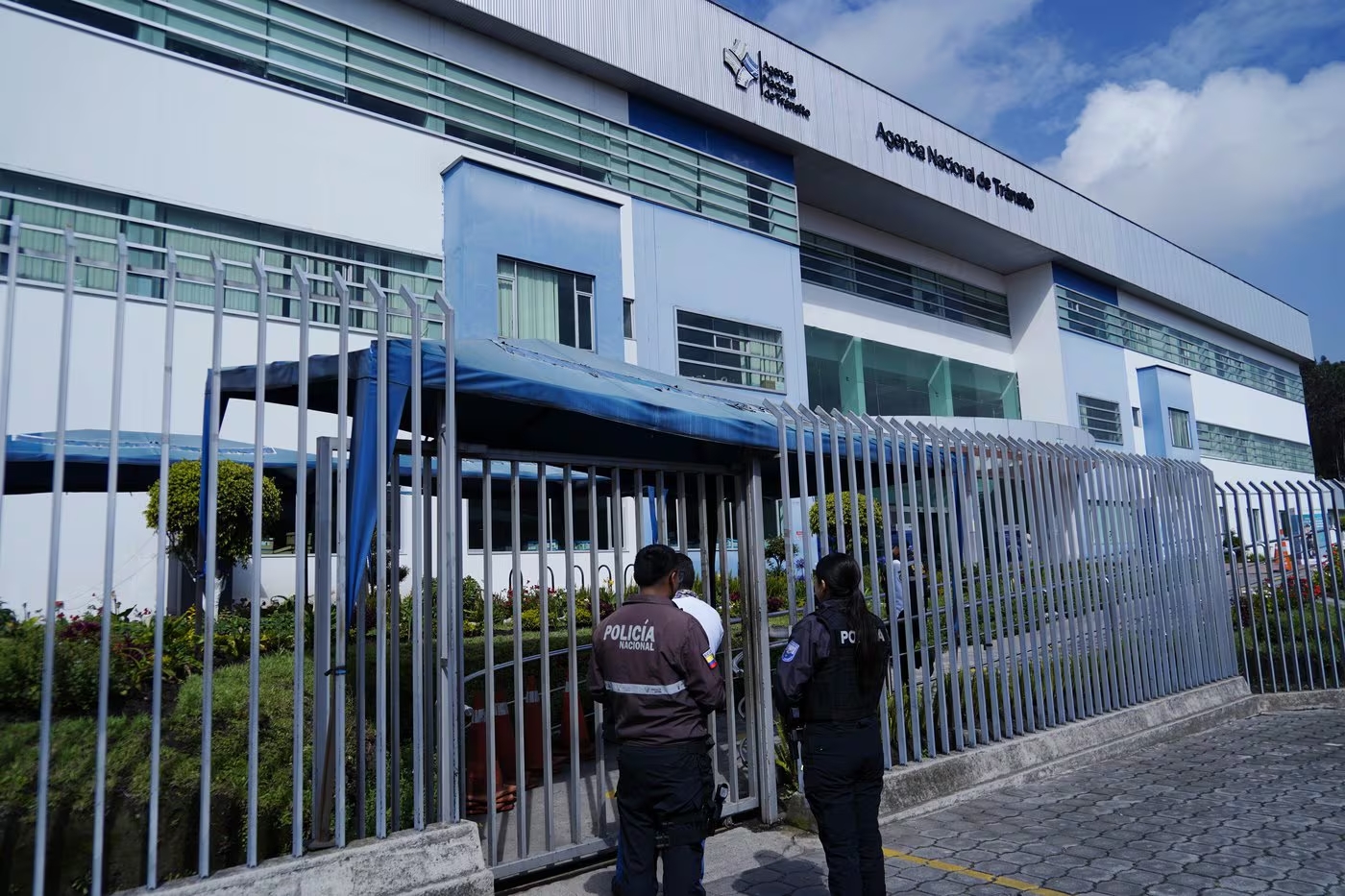
Before dawn on January 30th, coordinated police and prosecutorial teams swept through offices and homes linked to Ecuador’s National Transit Agency, detaining senior officials and sealing buildings in Quito, Ibarra, Santo Domingo and other cities. By midday, a core public service — driver’s licenses, vehicle registrations and transport permits — had been brought to a standstill, as investigators moved to secure evidence in what they describe as an organized crime case operating from inside the agency itself.
Authorities say the operation, known as the ‘Jaque’ case, targets a network that charged citizens to fast-track procedures that should have been routine. Fees, according to the investigation, ranged from $150 to $250 per transaction, turning administrative delays into leverage and public authority into a commodity.
How the investigation began
The case traces its origins to a mid-2025 complaint submitted through a crime hotline. The report described a pattern that many users recognized: guards waving familiar intermediaries through agency doors while others were turned away, and a parallel system of phone numbers and aliases tied to guaranteed approvals. That tip, prosecutors say, provided a roadmap — names, prices and access points — that guided months of surveillance.
With court authorization, investigators deployed wiretaps and physical monitoring. By the end of the year, they concluded that insiders and outside brokers were coordinating payments, approvals and document printing, while carefully managing who received service and when.
Messages that mapped the scheme
The intercepted conversations form the backbone of the case. Chats detail cash drops arranged in shopping-center food courts, deposits split across accounts, and constant anxiety over moving too much money too visibly. One user-services chief worried openly about missing income if she took vacation. Others tracked quotas, complained about shortfalls reaching “management,” and labeled payments with bureaucratic precision.
Several exchanges are cited by prosecutors as linking the agency’s former director to the network. In those messages, colleagues referred to him by an alias, sought his intervention to resolve stalled procedures, and discussed delivering money through third parties. When police searched his home, they seized nearly $20,000 in cash, a firearm with ammunition, electronic devices and folders listing what appeared to be outstanding payments tied to names and prior cases of influence peddling.
The former director has said he alerted authorities earlier in January, a claim now being weighed against the recorded communications.
Printing licenses, printing money
Beyond coordination, the chats reveal how the system functioned day to day. Technicians described licenses ready to print once documents passed through data entry, assuring colleagues that “nobody will know.” Others complained about losing thousands of dollars while waiting for payments to be released. When internal systems slowed or failed, the response was pressure, not compliance.
Searches at the homes of technicians and intermediaries produced cash, jewelry, watches, mobile phones and stacks of inspection reports and training-school files from multiple municipalities. Investigators catalogued vehicle inspection forms, license plates and registration certificates, evidence they say illustrates how deeply the scheme penetrated routine workflows.
The balance sheet of corruption
Chats attributed to revenue and user-service staff show how prices were set and proceeds divided. In one exchange, dozens of applications arrived at once, only a fraction were processed, and a coordinator was told to bring “crooked documents,” with a specific amount earmarked for “the boss” and the rest split down the chain. Other messages itemized fees for exams, special licenses and expedited services, including sums explicitly reserved to pay senior officials.
Investigators also point to outside actors: couriers transporting licenses, local political figures facilitating permits, and driving schools linked to payments for leadership posts. Documents seized during the raids tie these intermediaries directly to the licensing pipeline.
Arrests and evidence
Nine officials, including the agency’s national director, were placed in pretrial detention as part of the initial phase of the case. Police reported seizing dozens of mobile phones and computers, more than 160 pieces of documentary evidence, over $53,000 in cash, and a firearm with ammunition. Interior authorities estimate the economic damage from the alleged scheme could exceed $3 million, though that figure remains under investigation.
A new director and damage control
In the wake of the raids, President-appointed director Luis Darío Villacrés assumed leadership of the agency, immediately requesting the resignation of all senior staff. In his first public statements, he promised that citizens would not be penalized for delays caused by the shutdown, announcing extensions for vehicle registration deadlines and assurances that fines would not be imposed for services the agency is currently unable to provide.
Villacrés said the agency is reviewing every procedure “service by service” to identify vulnerabilities, while working to restore operations as quickly as possible. He acknowledged long-standing problems with the Axis 4.0 platform — the centralized system that manages vehicle procedures nationwide — describing it as outdated and prone to failures that have repeatedly disrupted services and, investigators suggest, may have been exploited.
An agency under scrutiny
With offices closed for at least 30 days and evidence still being analyzed, prosecutors are now focused on determining how long the network operated and how many transactions passed through it. The intercepted messages suggest a culture that treated public service as inventory, rationed and priced according to demand.
As the legal process advances, the agency remains effectively under lock and key, its future tied to whether authorities can dismantle the internal marketplace exposed by the wiretaps and rebuild a system that delivers licenses and registrations without aliases, cash drops or whispered price lists.
0 Comments