
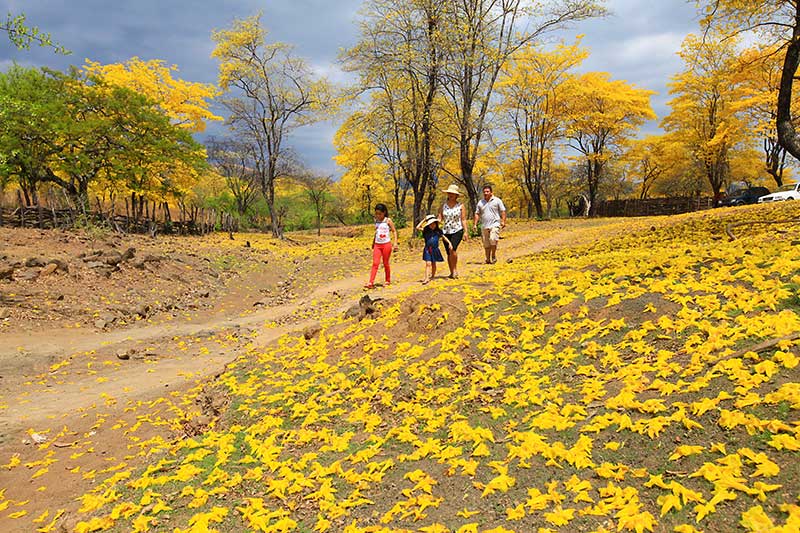
Zapotillo’s annual yellow bloom passes its peak, closing a brief but vital season for nature and local economies.
The greatest show in the southern dry forest is ending. The annual flowering of the Guayacanes in Zapotillo, a natural phenomenon that rivals the cherry blossoms of Japan, has passed its peak for 2026. If you haven’t gone yet, you have missed the canopy, but you might just catch the carpet.
The Mechanism of Magic
The Guayacán (Handroanthus chrysanthus) is a master of timing. For most of the year, it stands as a skeletal, grey trunk in the parched landscape of the border region. It waits for the first significant winter rains. Once the water hits the roots, the tree explodes into life.
This year, the rains arrived in early January. By January 17th, the 40,000 hectares of forest in the parishes of Mangahurco, Bolaspamba, and Cazaderos turned a brilliant, blinding yellow. The bloom is synchronized; millions of trees flower at once to maximize pollination chances before the dry season returns.
The Yellow Carpet Phase
As of the week of January 26th, the event has transitioned to its final phase. The flowers, having done their job, are falling. The “golden rain” has coated the forest floor, the roads, and the trails in a thick layer of yellow petals.
While photographers cherish the “full canopy” phase, the “carpet phase” has a distinct, melancholic beauty. The contrast of the yellow petals against the brown earth and the green of the sprouting undergrowth is striking. Camping in the forest during this phase is a surreal experience—sleeping on a bed of flowers.
An Economic Lifeline
For the communities of Zapotillo, this week-long event is their economic harvest. Thousands of tourists flooded the zone this month. The “boots on the ground” report from Mangahurco describes a town transformed: every house becomes a restaurant, every spare room a hotel, every field a parking lot.
“Nature rewarded us,” said Franco Farfán, president of the Mangahurco parish council. The rains were perfect—strong enough to trigger the bloom, but not so violent as to wash out the access roads (unlike in the rest of the province).
Now, the petals turn to mulch, feeding the soil. The trees will leaf out in green, blending back into the forest. Zapotillo returns to its quiet, agricultural existence, its pockets full and its pride intact, waiting for the rain to call the gold back in 2027.
| Guayacanes Timeline 2026 | Status |
| Early Jan | First Rains (Trigger Event) |
| Jan 15-16 | Budding / First Flowers |
| Jan 17-22 | PEAK BLOOM (Full Yellow Canopy) |
| Jan 23-26 | Flower Drop / “Yellow Carpet” Phase |
| Feb 1 onwards | Green foliage returns (Event Concludes) |
0 Comments