
Government launches inter-institutional body to move from planning to potential nuclear power within a decade.
Ecuador has taken a decisive institutional step toward introducing nuclear technology by creating a specialized agency charged with steering the country’s nuclear program from design to execution, including the long-term goal of operating its first nuclear reactor.
The Ministry of Environment and Energy announced the establishment of the Nuclear Program Implementation Unit, an entity intended to centralize technical leadership and coordination as Ecuador transitions from preliminary planning into what authorities describe as an orderly, progressive and safety-first development phase.
Officials say the move aligns Ecuador with international standards and marks a necessary threshold in any national nuclear program, particularly under the framework promoted by the International Atomic Energy Agency.
From policy to implementation
The new unit is expected to be formally constituted during the first quarter of 2026. Once operational, it will bring together all relevant state institutions involved in nuclear policy, regulation, safety, energy planning, and environmental oversight.
According to government officials, the agency’s mandate extends beyond coordination. It will assume technical management of the nuclear program through all preparatory stages, culminating—if milestones are met—in the commissioning of Ecuador’s first nuclear reactor, provisionally identified as RNE1, within an estimated ten-year horizon.
This timeline reflects what authorities characterize as a cautious, phased approach rather than a rapid deployment, emphasizing governance and institutional readiness before any construction decisions are finalized.
Safety framework already in place
The creation of the implementation unit builds on an existing national policy framework governing nuclear and radiological activities. Ecuador has already adopted a Radiological Protection and Nuclear Safety Policy, which officials describe as the backbone of the country’s nuclear ambitions.
That policy establishes safety, environmental protection, and infrastructure security as absolute priorities for any current or future nuclear activity. Government representatives argue that embedding these principles at the policy level is essential for public confidence and international credibility, particularly for a country with no prior experience operating nuclear facilities.
Authorities stress that the new agency is not being created in a regulatory vacuum, but rather as an operational extension of policies already approved at the national level.
International oversight and cooperation
Ecuador continues to work closely with international partners as it advances its nuclear agenda. Technical cooperation with the IAEA remains ongoing and includes specialized assistance, training programs, and continuous monitoring of institutional progress.
Government officials say this collaboration has played a critical role in shaping the structure of the new implementation unit and ensuring that Ecuador’s program adheres to non-proliferation commitments and the highest global safety standards.
The ministry also noted that these institutional and regulatory advances have drawn interest from established nuclear nations and companies, particularly those specializing in emerging technologies and regulatory-compliant project development.
Energy diversification, not replacement
Officials emphasize that nuclear energy is being evaluated as a complement—not a substitute—to Ecuador’s existing energy matrix, which relies heavily on hydroelectric generation. Repeated droughts and climate variability have exposed vulnerabilities in that model, prompting the government to explore more stable baseload alternatives.
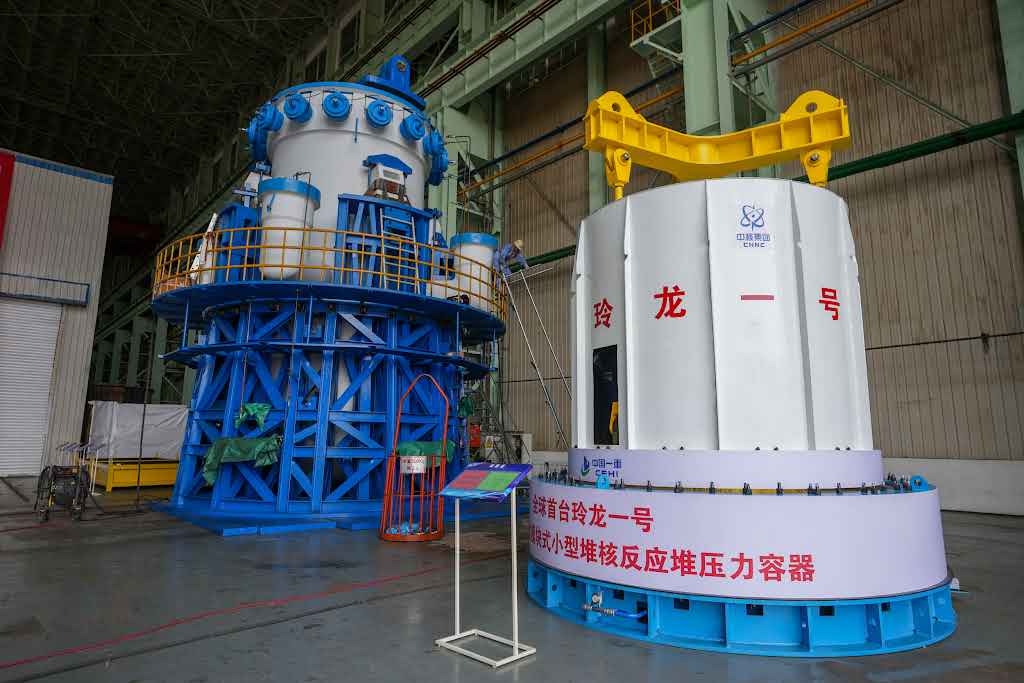
Within that context, authorities say nuclear technologies could offer clean, reliable electricity over the medium and long term. Particular attention is being given to small modular reactors, which are often presented as more flexible and potentially safer options for countries entering the nuclear sector for the first time.
The ministry underscored that no final decision has been made regarding reactor type, location, or financing, noting that those determinations would come only after extensive technical, environmental, and social evaluations carried out under the supervision of the new agency.
As Ecuador positions itself for a long and closely scrutinized nuclear journey, the creation of the Nuclear Program Implementation Unit signals that the discussion has moved beyond aspiration and into structured state planning—albeit on a timeline measured in years, not political cycles.
About time Ecuador figured out that safe nuclear, is the way to go. Safe, clean, efficient base load power!
When the world is moving away from nuclear energy, it is terrible to see Ecuador considering this option. Financing institutions are fine lending money that collects interest for ten years before the projects is put in service. The nuclear energy companies are having a hard time finding customers for their products, hope Ecuador wakes up and abandones this lunacy.
This is a viable solution with the R I G H T construction contractor…PLEASE do NOT let the Chinese build it!
I’m not against nuclear, but it’s extremely expensive to build and it’s vulnerable to seismic events. With Ecuador’s abundant access to solar and geothermal, why don’t we see diversification in those directions?
Clean??!! What about the spent waste? Where will that be dumped?
Hopefully they will also look hard at molten salt reactors.
While I dont trust the Chinese they took the 60’s US tech on thorium & have made significant improvements.